
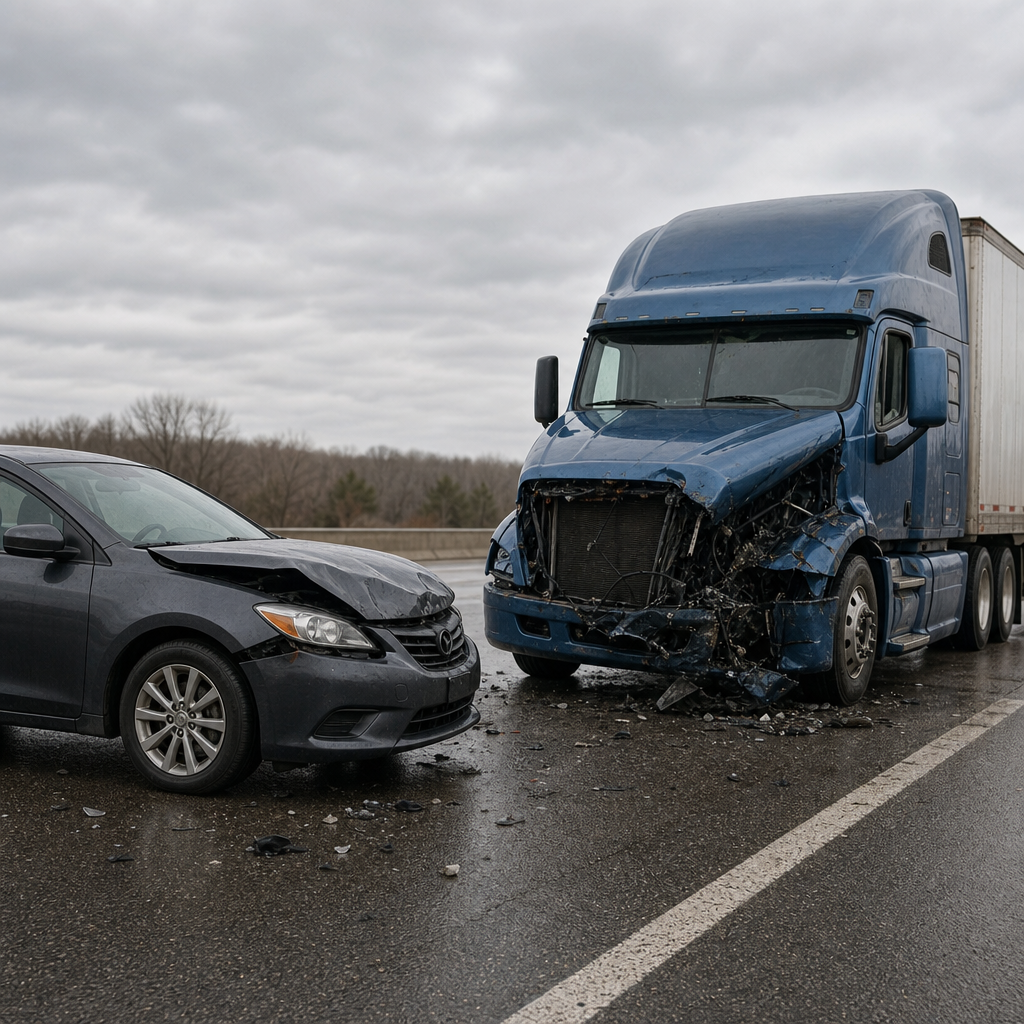
An ordinary drive can change in seconds when a semi truck enters the equation. You see people pulled over on the shoulder, blinking in disbelief or sitting quietly, trying to piece together what just happened. Some step out, shaken; others stay inside, hands gripping the wheel.
Immediate Shock and Confusion
After the initial impact, dazed expressions often take over. Conversation halts. Engine sounds and distant horns fade as adrenaline rushes in. Sometimes even those involved aren’t fully aware of injuries or vehicle damage right away. Uncertainty hangs in the air, with people glancing over at the truck, then at their own vehicles, processing the chaos.
In less severe scenarios, drivers check themselves, spot a cracked bumper, and talk through the accident, voice trembling. Bruised egos, rattled nerves, but everyone on their feet, usually able to exchange information. In harsher collisions, confusion lingers much longer, and sometimes people remain motionless, unable to fully process the magnitude of what just occurred.
Physical Aftermaths Vary Wildly
Minor crashes might leave someone with a sore neck, a bit of stiffness, or lingering headaches. It’s common to rub shoulders, stretch fingers, and assess scrapes or bruises right there at the side of the road. Occasionally, adrenaline masks pain, so symptoms crop up later, leading to surprise in the hours or days following the accident.
Severe impacts create a completely different atmosphere. Emergency vehicles often gather nearby as injuries become impossible to ignore. Broken bones, deep lacerations, and significant trauma are not unusual after a major semi truck accident. Friends or bystanders sometimes recount details as victims wait, pain evident in every motion or word.
Emotional and Mental Responses
Fear follows even those unharmed physically. You notice hands shaking, voices cracking while recounting the moments before the impact. Sleep disruptions and increased anxiety are common, especially after seeing a family member or friend involved in the crash. Sometimes silence takes over—no words, just heavy breathing and distant stares.
Long after broken glass is swept up, vivid memories linger. Even after a minor impact, people may replay the moment as they drive by similar trucks or highways. With greater severity, some individuals express visible distress each time an engine roars by, avoiding routes that bring back the event.
Life Disruptions Take Many Forms
A fender bender means a morning thrown off schedule and insurance calls in the following days. Time taken from work or routines causes frustration, annoyance, and plenty of retelling to colleagues or loved ones.
In high-impact collisions, daily life might suddenly revolve around hospital visits and physical limitations. Chronic pain can replace old habits, and household dynamics shift to accommodate new challenges. Across all cases, you see priorities changing, days reordered, and routines reshaped by a single moment of unexpected impact.
This page is for general informational purposes only. It does not provide legal advice or direction of any kind.