
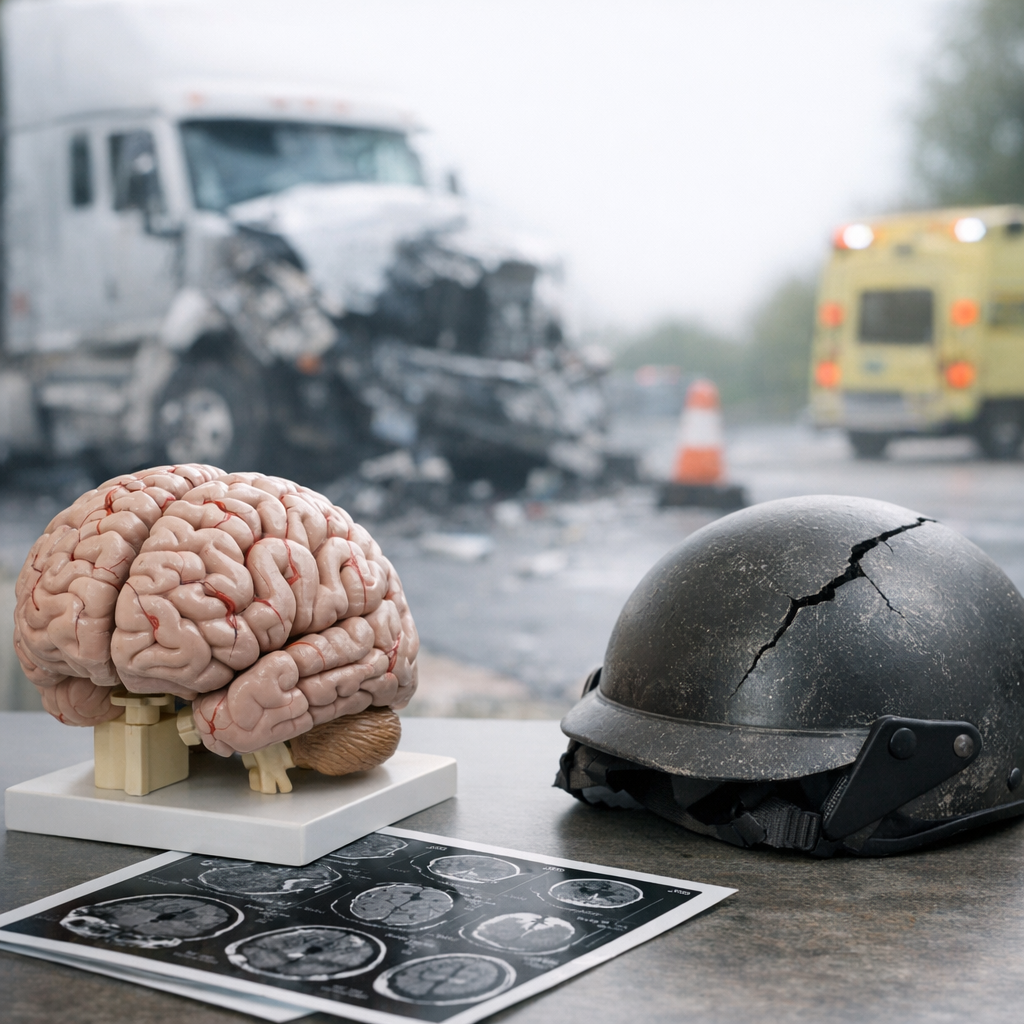
Traumatic Brain Injuries from Truck Accidents
Overview of the Injury
Traumatic brain injuries (TBIs) are a serious consequence of accidents involving large vehicles, such as trucks. These injuries occur when a sudden impact causes damage to the brain, disrupting its normal function. The effects can range from mild to severe, with potential for long-term complications.
How This Injury Commonly Occurs in Truck Accidents
Truck accidents are particularly dangerous due to the size and weight of the vehicles involved. The force of a collision can be substantial, leading to significant head trauma. Common scenarios include:
– Head Strikes: Occupants may hit their heads against steering wheels, dashboards, or windows.
– Whiplash-Type Movements: Sudden back-and-forth motions can cause the brain to collide with the skull.
The impact of these situations increases the likelihood of sustaining a TBI, highlighting the need for safety features and awareness in truck operations.
Typical Symptoms and Physical Effects
The symptoms of a truck brain injury vary depending on the severity, but common signs include:
– Headaches and Dizziness: Frequent or persistent headaches are often reported.
– Confusion or Disorientation: Individuals may struggle to focus or remember details.
– Nausea or Vomiting: These can occur soon after the injury.
– Vision and Hearing Problems: Blurred vision or ringing in the ears might be present.
Gauging these symptoms promptly can play a crucial role in receiving timely care and minimizing complications.
How the Injury Affects Daily Activities
A TBI can substantially alter a person’s daily life, impacting various aspects such as:
– Cognitive Function: Tasks that require concentration, like reading or problem-solving, may become challenging.
– Physical Abilities: Balance and coordination might be compromised, affecting mobility.
– Emotional Stability: Mood swings, irritability, or depression can occur.
– Social Interactions: Communication difficulties or changes in behavior might strain relationships.
Adjusting to these changes requires support from family, friends, and healthcare professionals.
Variations in Severity
TBIs from truck accidents can range in severity:
– Mild (Concussions): Symptoms are usually temporary but still require attention.
– Moderate to Severe: Can lead to prolonged unconsciousness, lasting cognitive issues, or physical impairments.
Understanding the specific type of TBI helps in determining appropriate care strategies.
Factors That Influence Recovery
Recovery from a truck brain injury depends on numerous factors, such as:
– Age and General Health: Younger, healthier individuals might recover more rapidly.
– Promptness of Medical Attention: Early diagnosis and treatment improve outcomes.
– Rehabilitation: Access to therapies like physical, occupational, and speech therapy aids recovery.
– Support Network: Encouragement from loved ones and professionals is essential for emotional and psychological healing.
Conclusion
Traumatic brain injuries resulting from truck accidents present a complex challenge, affecting individuals in varied ways. Awareness of these injuries’ causes, symptoms, and impacts is crucial for recognizing their seriousness. While the road to recovery can be daunting, understanding the nuances of TBIs equips those affected and their families with the knowledge needed to navigate the complexities of treatment and adaptation.