
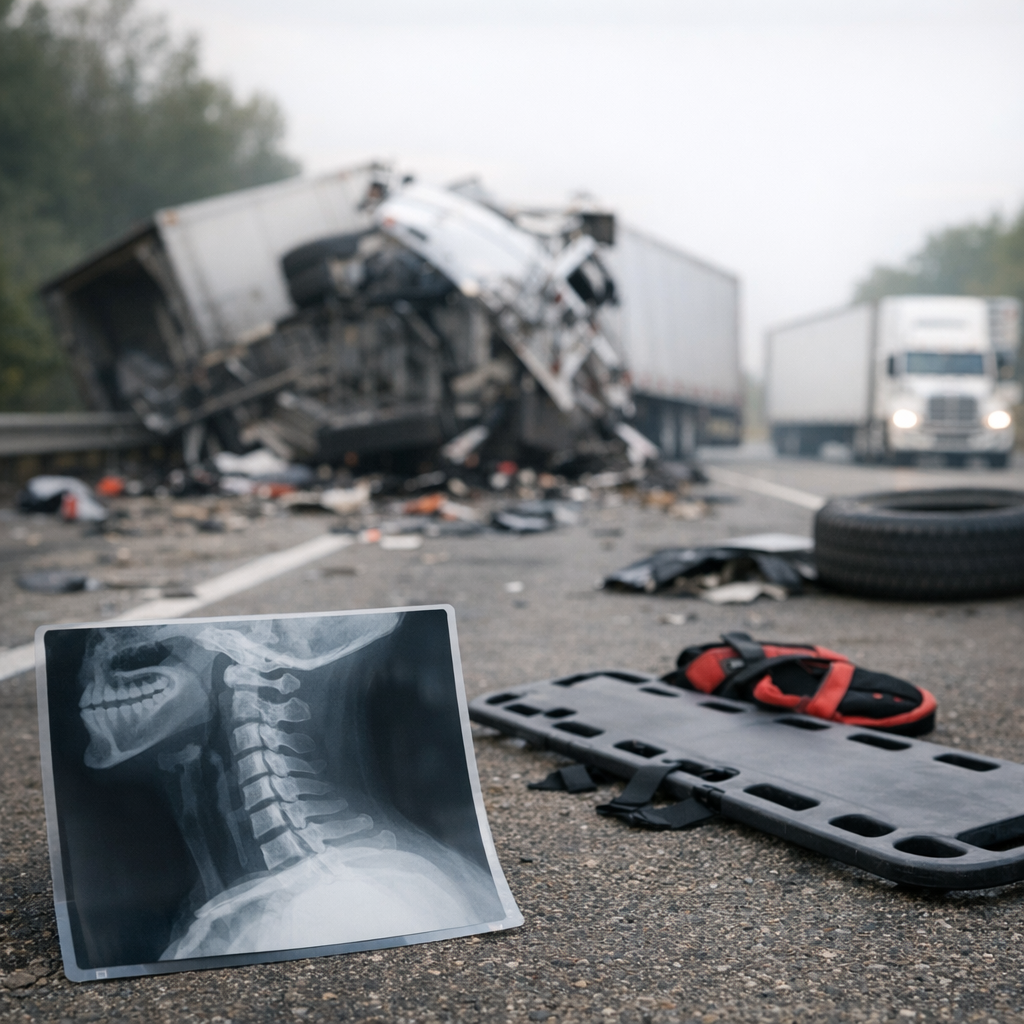
Spinal Cord Injuries After Truck Crashes
Overview of the Injury
Spinal cord injuries (SCIs) are severe medical conditions that greatly impact a person’s life, particularly following a traumatic event like a truck accident. These injuries involve damage to the spinal cord, a crucial component of the central nervous system, responsible for transmitting signals between the brain and the rest of the body. The consequences of a spinal cord injury can be profound, ranging from partial loss of sensation to complete paralysis.
How This Injury Commonly Occurs in Truck Accidents
Truck accidents are markedly different from typical vehicle collisions due to the sheer size and weight of trucks. When a truck is involved in an accident, the force exerted can cause significant damage to all vehicles involved and their occupants. In a severe crash, the spine may be subjected to violent jolts or compressions, leading to potential spinal cord injuries.
Typical Symptoms and Physical Effects
The symptoms of spinal cord injuries can vary widely depending on the location and severity of the injury. Common symptoms include:
– Loss of movement
– Loss of sensation, including the ability to feel heat, cold, and touch
– Muscle weakness or paralysis
– Pain or an intense stinging sensation
– Difficulty breathing or coughing if the injury is in the cervical spine (neck region)
These symptoms can lead to numerous physical challenges, requiring ongoing management and care.
How the Injury Affects Daily Activities
The impact on daily life is often significant. Even minor spinal cord injuries can impede a person’s ability to perform everyday tasks, such as walking, driving, or working. The loss of independence can be disheartening, as individuals may need assistance with basic activities like dressing and bathing.
For those with severe injuries, the use of assistive devices such as wheelchairs or adaptive equipment may become necessary. Rehabilitation programs often aim to help individuals regain as much function as possible, teaching new ways to perform daily activities or adapt to new limitations.
Variations in Severity
Spinal cord injuries can range from incomplete, where there is some function and feeling below the level of injury, to complete, where all sensory and motor function is lost below the injury site. The level of the spinal cord at which the injury occurs also plays a crucial role in determining the types of symptoms experienced. For instance, injuries higher up on the spinal cord, such as in the cervical region, can result in tetraplegia, while lower injuries may result in paraplegia.
##### Factors That Influence Recovery
Recovery from a spinal cord injury is influenced by several factors, including the severity of the injury, the timeliness and quality of medical intervention, and the individual’s overall health and fitness level. Rehabilitation and physical therapy are key components of recovery, aiming to strengthen the body and improve mobility as much as possible.
While some individuals may regain varying degrees of function, the journey is often unpredictable and requires significant effort and support.
Closing Thoughts
Spinal cord injuries following truck crashes are life-altering events with wide-ranging effects on physical health and daily life. The severity of the impact largely depends on the nature of the injury and individual circumstances. Understanding the symptoms and challenges associated with these injuries can help individuals and their families navigate the journey toward adapting and managing life post-injury. Remaining informed and connected to supportive resources can make a significant difference in dealing with the aftermath of such a serious condition.