
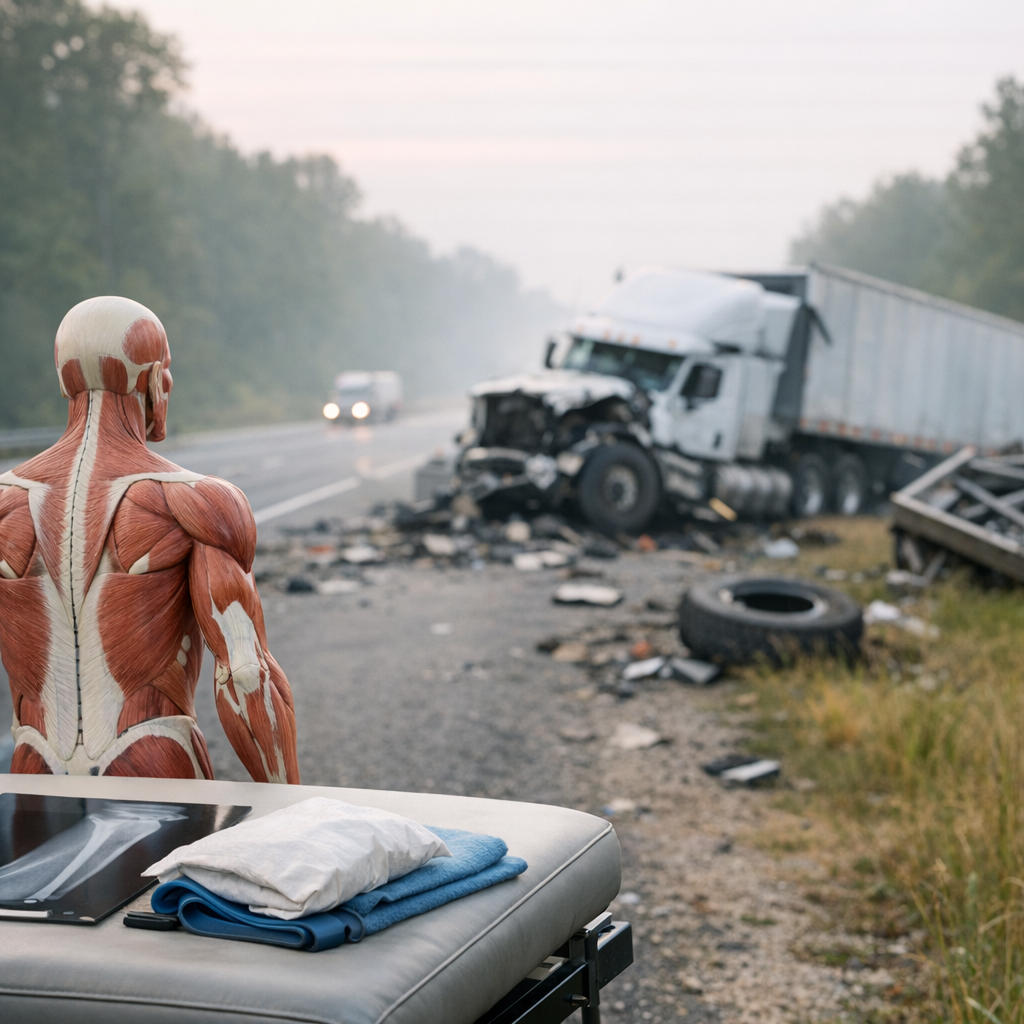
Severe Muscle Damage from Truck Crashes
Truck accidents can be devastating, not only due to the sheer size of these vehicles but also because of the severe injuries they can cause. One such injury is severe muscle damage, which can have significant implications for a person’s health and daily life.
Overview of the Injury
Severe muscle damage occurs when the muscle fibers are torn or severely strained due to a high-impact collision. These injuries can range from mild strains to complete tears that require extensive recovery. In the context of truck crashes, the force of the impact often leads to more serious muscle damage compared to other types of accidents.
Typical Symptoms and Physical Effects
Symptoms of severe muscle damage vary, but common indicators include intense pain, swelling, bruising, and a limited range of motion. In some cases, there may be visible deformities or a “popping” sensation at the time of injury. The physical effects extend beyond immediate discomfort—it can take weeks or even months to heal, depending on the severity.
How the Injury Affects Daily Activities
The impact of severe muscle damage on daily activities can be profound. Tasks that were once simple, such as walking, lifting objects, or even sitting comfortably, might become difficult or impossible. The injury can also lead to increased dependency on others for basic needs, which can affect personal autonomy and quality of life.
How This Injury Commonly Occurs in Truck Accidents
Muscle damage from truck crashes often results from the high-speed impact and the massive force exerted during a collision. In accidents involving trucks, the potential for severe injuries is heightened due to the weight and speed of these vehicles. Common scenarios include:
– Direct Impact: When a smaller vehicle is hit by a truck, the occupants may experience significant force upon impact, leading to muscle tears or strains.
– Sudden Stops: The abrupt halting of motion can cause internal stress to the muscles, leading to severe strain or tearing.
– Ejection from Vehicle: In some cases, individuals may be ejected from their vehicle during the crash, causing multiple points of impact and resultant muscle injuries.
Variations in Severity
The severity of muscle damage can vary widely. A minor strain may heal on its own with rest and rehabilitation, while severe tears might require surgical intervention. The extent of the injury is often dependent on multiple factors, including the speed of the vehicle, the angle of impact, and the physical condition of the individual involved.
Factors That Influence Recovery
Several factors can influence the recovery process following severe muscle damage. These include:
– Age and Overall Health: Younger individuals or those in good physical condition may experience quicker recovery times.
– Prompt Medical Attention: Swift diagnosis and appropriate treatment can prevent further complications and promote healing.
– Rehabilitation and Physical Therapy: An effective rehabilitation program designed by healthcare professionals can aid in restoring muscle function and improving mobility.
Informational Closing
Understanding the potential for severe muscle damage in truck crashes is crucial for recognizing the profound effects these injuries can have on an individual’s life. While the path to recovery varies for each person, awareness and understanding of the injury’s impact can help navigate the challenges it presents. By acknowledging the complexities involved in such injuries, individuals, healthcare providers, and accident prevention strategists can work towards better preparedness and response to these unfortunate events.