
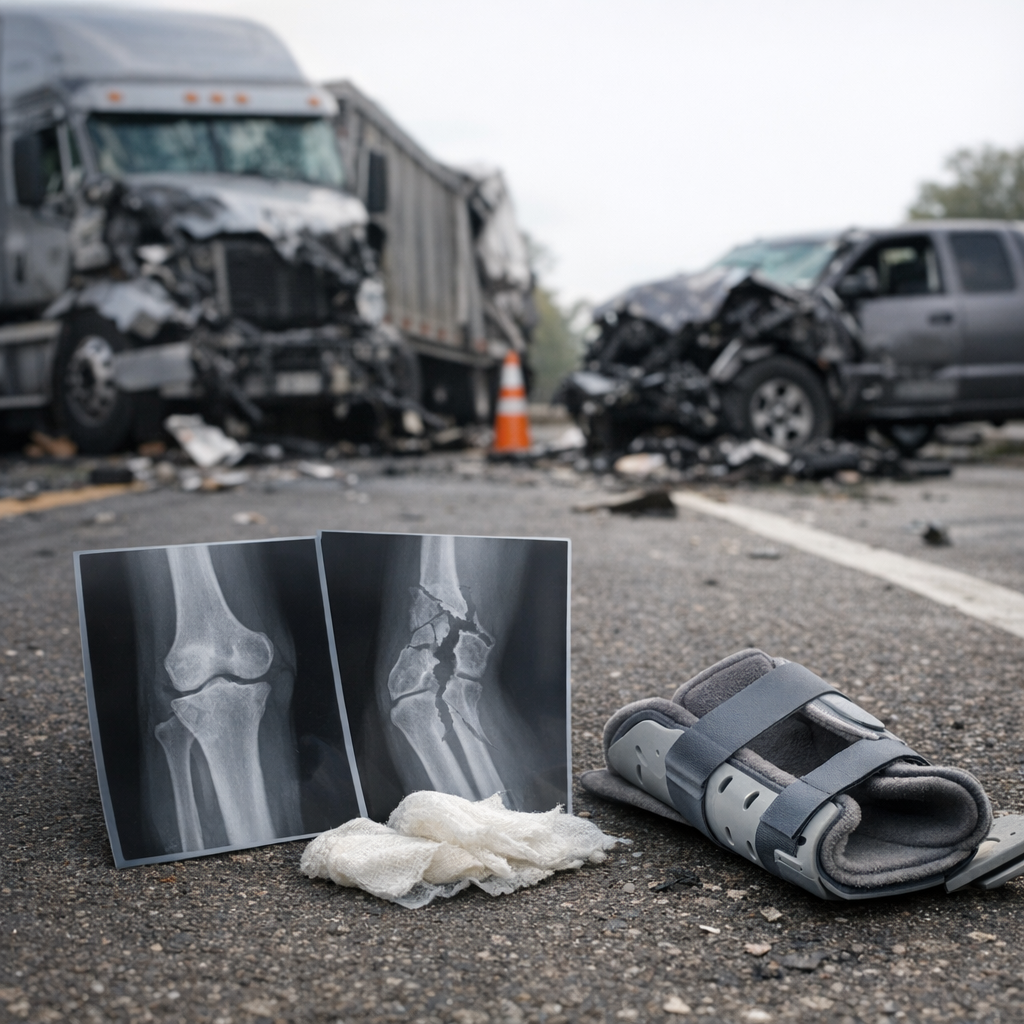
Fracture Injury Nightmare: Severe Breaks in Truck Accidents
Overview of the Injury
Fracture injuries resulting from truck accidents are serious and often life-altering. These fractures occur when bones are subjected to forces they cannot withstand, resulting in breaks that can range from simple to severe. Such injuries not only cause immediate pain and discomfort but can also lead to prolonged medical treatment and rehabilitation.
Truck accidents have the potential for catastrophic outcomes, and fractures are among the most common injuries sustained in such incidents. Understanding the nature and impact of these injuries is crucial for those affected and their families.
How This Injury Commonly Occurs in Truck Accidents
Truck accidents have distinctive characteristics that make them particularly dangerous. The sheer size and weight of trucks mean that collisions can have devastating effects on smaller vehicles. Fracture injuries typically occur during crashes where significant force and impact are involved.
Typical Scenarios Leading to Fractures
1. High-Speed Collisions: When trucks are involved in high-speed collisions, the immense force can lead to severe fractures. This is especially true when there are sudden stops or direct impacts.
2. Pinned or Crushed Vehicles: Sometimes, smaller vehicles may get pinned or crushed between trucks and other objects. The resulting pressure can cause bones to fracture under intense stress.
3. Rollover Accidents: In rollover scenarios, both truck drivers and other motorists may suffer fractures as trucks overturn, leading to complex impact patterns.
Typical Symptoms and Physical Effects
Understanding symptoms is crucial for timely medical intervention. Common symptoms of fracture injuries from truck accidents include:
– Intense pain at the injury site
– Swelling and bruising
– Limited mobility or inability to move the affected limb
– Deformity or abnormal angle of the bone
– Sensation of grinding in the affected area
How the Injury Affects Daily Activities
Fractures from truck accidents can significantly disrupt daily life. Here’s how:
– Mobility Challenges: Depending on the fracture’s location and severity, individuals might require mobility aids or face restrictions in movement, affecting work and personal activities.
– Chronic Pain: Some fractures result in ongoing pain that may impact productivity and enjoyment of daily life.
– Emotional and Psychological Impact: Dealing with a significant or prolonged fracture injury can lead to emotional distress, anxiety, and even depression.
Variations in Severity
Fractures can vary widely in severity:
– Simple Fractures: Involve a clean break without significant complications; often easier but still challenging to treat.
– Compound Fractures: These are more severe, involving broken bones piercing the skin, which can lead to more complex medical issues.
– Comminuted Fractures: Occur when the bone shatters into multiple pieces, often requiring intricate surgical intervention.
Factors That Influence Recovery
Recovery from fracture injuries depends on multiple factors:
– Age and Overall Health: Younger individuals or those in good health may recover more swiftly compared to older adults or those with underlying conditions.
– Nature of the Break: The location and complexity of the fracture impact the recovery process, with compound and comminuted fractures generally requiring longer recovery periods.
– Access to Medical Care: Timely and appropriate medical intervention, along with follow-up care, significantly influences recovery outcomes.
A Calm, Informational Closing Section
Navigating the aftermath of a fracture injury from a truck accident involves a comprehensive understanding of the injury’s complexities. It’s essential to be informed about the various aspects of fracture injuries, from how they occur to their potential impacts on daily life. This awareness can help those affected make informed decisions about their healthcare and adjust to the changes these injuries may bring.
In the unfortunate event of experiencing such an injury, focusing on recovery and understanding the journey ahead can aid in managing the trauma and fostering a better quality of life. Educational resources and medical professionals can provide support, ensuring those affected have access to the information and care they need.