
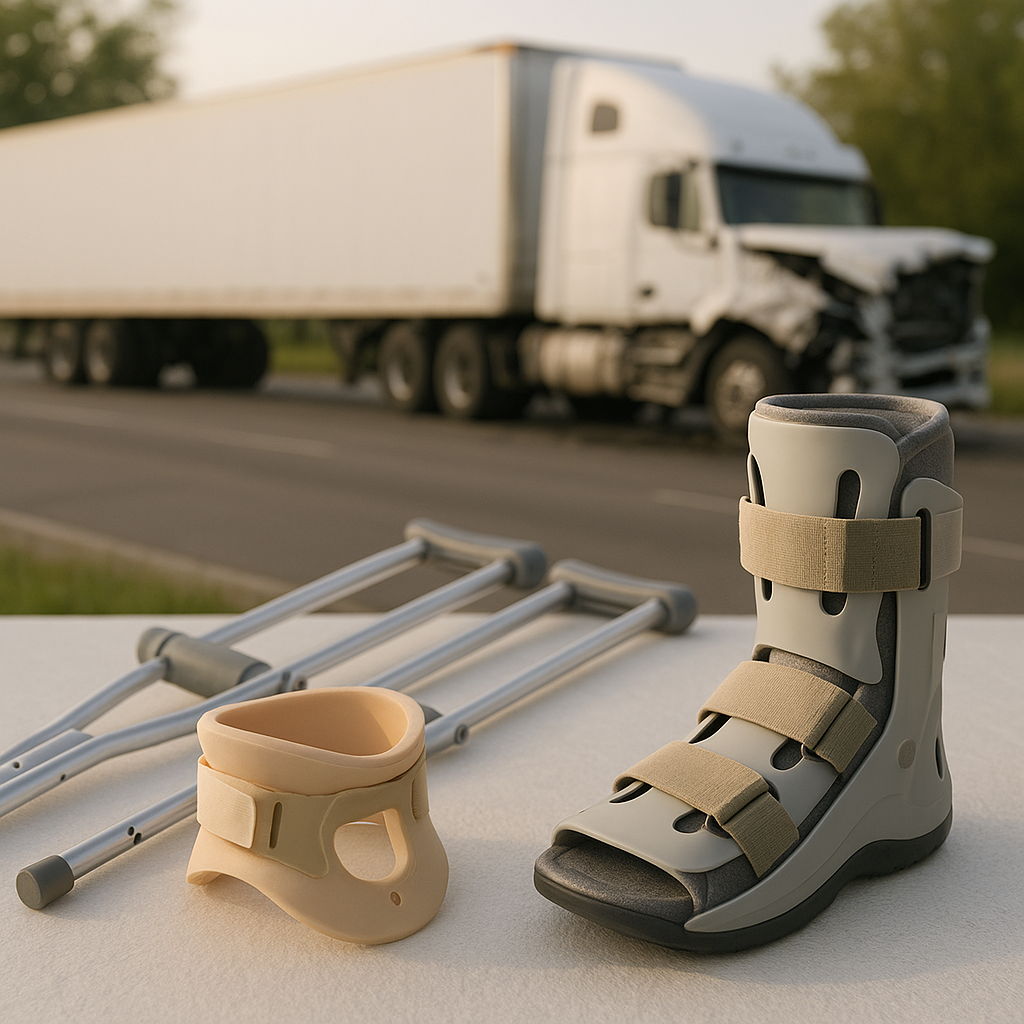
Orthopedic Injuries from Truck Accidents
Overview of the Injury
Orthopedic injuries are a common consequence of truck accidents, involving damage to the musculoskeletal system. This includes bones, joints, ligaments, tendons, and muscles. Such injuries can range from minor fractures to severe trauma requiring long-term rehabilitation.
These injuries can profoundly affect a person’s mobility and quality of life. In the context of truck accidents, the sheer size and weight of trucks mean that the potential impact can lead to more serious orthopedic damage than other types of vehicle collisions.
How This Injury Commonly Occurs in Truck Accidents
Truck accidents present unique hazards due to the vehicles’ large size and considerable weight. When involved in an accident, the force generated can cause significant stress on the body.
Orthopedic injuries may occur in several scenarios during truck accidents:
– Direct Collision: A head-on impact can cause fractures or dislocations as the body absorbs the shock.
– Side Impact or T-bone Collisions: These often result in complex fractures, particularly in the rib cage, pelvis, and lower limbs.
– Rollovers: When a truck rolls over, it can lead to severe spinal and limb injuries due to the body’s twisting and compressive forces.
– Under-ride Accidents: Smaller vehicles can become wedged under a truck, potentially leading to catastrophic orthopedic injuries due to the compressed space.
Typical Symptoms and Physical Effects
Orthopedic injuries can manifest in various ways, depending on the severity and type of injury:
– Pain and Swelling: Initial symptoms often include acute pain and noticeable swelling around the affected area.
– Bruising: Discoloration and tenderness can occur as blood vessels are damaged beneath the skin.
– Mobility Loss: Severe injuries may lead to a temporary or permanent reduction in the range of movement.
– Visible Deformity: Some injuries, such as fractures or dislocations, can result in misalignment that is visible externally.
How the Injury Affects Daily Activities
Orthopedic injuries can significantly disrupt daily life, impacting one’s ability to perform routine tasks. Some common challenges include:
– Movement Limitations: Difficulty in walking, standing, or sitting can affect both work and leisure activities.
– Dependence on Mobility Aids: Depending on the injury severity, individuals may require crutches, wheelchairs, or braces.
– Daily Care Adjustments: Simple tasks like dressing, cooking, or personal hygiene may require substantial modifications or assistance.
– Work and Employment Impacts: Such injuries can necessitate time away from work, potentially impacting financial stability and career progression.
Variations in Severity
Orthopedic injuries can vary widely in severity, from minor strains to complex fractures requiring surgical intervention. The severity often depends on factors such as the speed of impact, the nature of the collision, and the individual’s physical condition.
Factors that Influence Recovery
Several factors can influence the recovery process for orthopedic injuries:
– Age and General Health: Younger and healthier individuals may recover more quickly. Chronic health issues can impede the healing process.
– Type and Location of Injury: Some areas, such as weight-bearing joints or the spine, may take longer to heal and require specialized treatment.
– Timeliness of Medical Intervention: Immediate diagnosis and treatment can enhance recovery prospects, preventing complications.
– Rehabilitation Efforts: Physical therapy and rehabilitation play crucial roles in restoring function and mobility.
A Calm, Informational Closing Section
Understanding orthopedic injuries from truck accidents is essential for appreciating the potential impact on individuals’ lives. These injuries can be complex, requiring comprehensive medical evaluation and rehabilitation efforts.
While every individual’s experience is unique, knowledge of typical symptoms and challenges can aid in recognizing the needs of those affected. Emphasizing awareness and support can foster a compassionate environment for those navigating recovery.