# How defective truck parts cause liability Defective components can turn an ordinary truck trip into a catastrophic incident—and when they do, **defective truck parts liability** often hinges on who designed, manufactured, installed, maintained, or ignored the problem. Below are the most common ways faulty parts create legal exposure and how responsibility is typically determined. ## 1) Defects that lead directly to crashes When a part fails, it can cause loss of control, delayed stopping, or sudden mechanical breakdowns. Common examples include: – Brake system failures (air brakes, calipers, lines, chambers) – Tire and wheel defects (tread separation, blowouts, rim failures) – Steering and suspension failures (tie rods, steering gears, kingpins) – Coupling and trailer connection failures (fifth wheel, hitch, safety chains) – Lighting and visibility defects (headlights, brake lights, reflective tape) If that failure contributes to a collision, it opens the door to claims based on product defects and negligence. ## 2) Product liability: when the part itself is defective A defective part can trigger product liability claims against parties in the supply chain (manufacturer, distributor, retailer). Defects generally fall into three buckets: – **Design defects:** The part is inherently unsafe even when made correctly (e.g., a brake component designed with insufficient tolerance for heat). – **Manufacturing defects:** The design is fine, but a specific batch is flawed (e.g., contaminated materials, improper welding, incorrect assembly). – **Failure to warn/instructions defects:** Inadequate warnings or installation instructions (e.g., no warning about required torque specs or maintenance intervals). This is a core driver of **defective truck parts liability**, because the focus is on the product and how it reached the road in an unsafe condition. ## 3) Negligence and maintenance liability: when people or companies contribute Even with a flawed part, liability can expand if others made the situation worse, such as: – Skipping inspections or ignoring warning signs (noise, vibration, wear indicators) – Installing incompatible parts or using incorrect procedures – Failing to follow recall notices or service bulletins – Poor fleet maintenance programs or inadequate mechanic training This can place responsibility on trucking companies, maintenance contractors, repair shops, or even individual technicians. ## 4) Recalls and prior knowledge increase exposure If a defect was known—or should have been known—liability risk rises. Evidence that can shift or strengthen fault includes: – Recall notices and whether they were acted upon – Prior similar incidents, complaints, or internal testing data – Service bulletins, warranty claims, and repair histories Failing to address a known defect can support claims for punitive damages in some jurisdictions. ## 5) Causation: linking the defect to the crash In defective-part cases, proving the failure caused the harm is essential. This often involves: – Preserving the failed part and documenting its condition – Downloading vehicle data (ECM/EDR) and maintenance logs – Accident reconstruction and metallurgical/engineering analysis – Reviewing installation records and torque/fitment specs Without a clear causal link, **defective truck parts liability** becomes harder to establish—even if the part looks suspicious. ## 6) Shared fault: multiple parties can be liable Truck-part cases frequently involve overlapping responsibility: – A manufacturer for a defective component – A distributor for selling it – A repair shop for improper installation – A fleet for poor maintenance or ignoring recalls – A driver for operating with known mechanical issues Many claims are resolved through comparative fault or apportionment, where each party pays according to its share of responsibility. ## 7) Damages and legal consequences When defective parts cause injuries or deaths, claims may seek: – Medical costs, lost income, and long-term care – Property damage and business interruption – Pain and suffering – In some cases, punitive damages (especially with knowledge or concealment) Regulatory consequences (DOT/FMCSA violations, civil penalties) can also compound exposure for fleets and maintenance providers. ## Conclusion “How defective truck parts cause liability” comes down to one key issue: when a component fails, liability can attach to the product maker, the parties who handled it, and those responsible for inspection and repair. Because **defective truck parts liability** is often shared across multiple actors, proving defect type, causation, and knowledge is central to determining who pays—and how much.

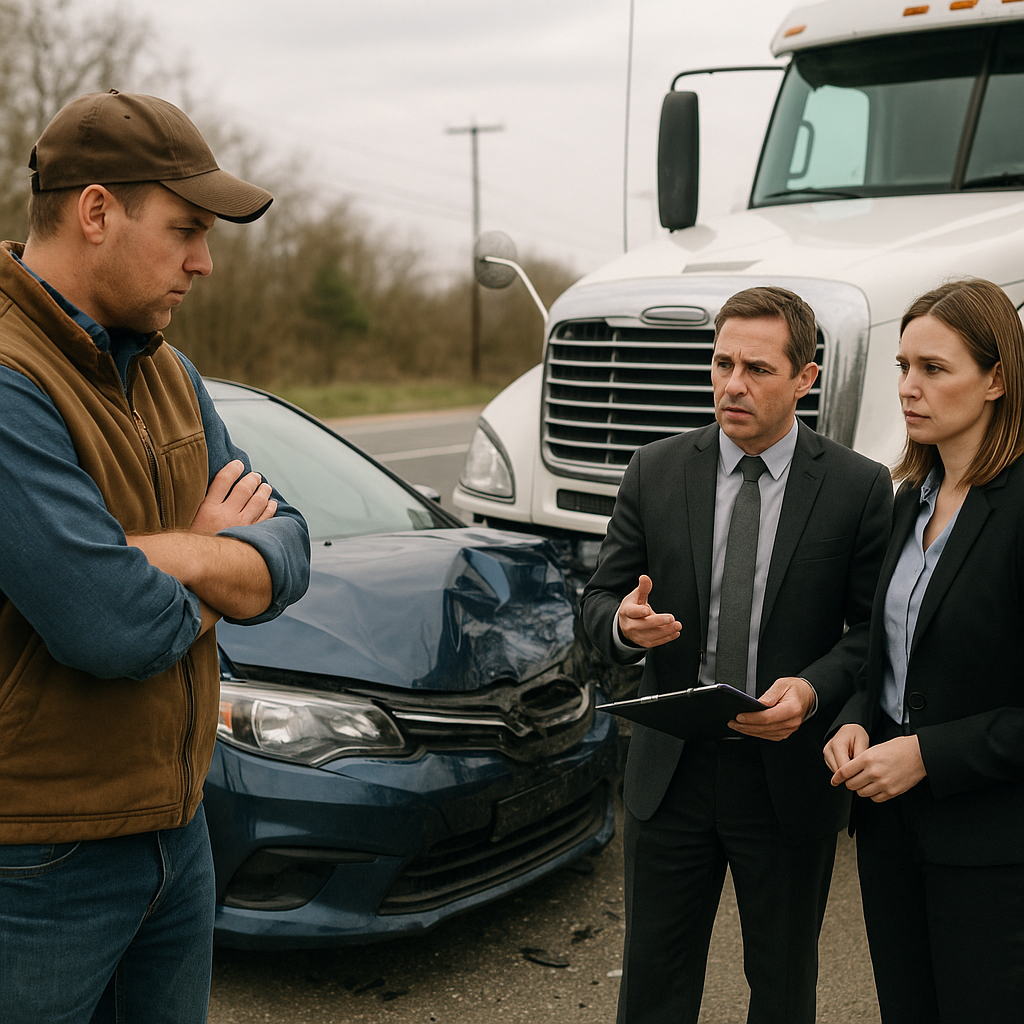
Illustration of # Truck driver vs company liability explained **Truck driver vs company liability** can be confusing, especia

Truck driver vs company liability explained

Introduction to fault and responsibility in truck accidents

Understanding truck driver vs company liability often starts with a simple idea: crashes can result from human decisions, organizational practices, mechanical conditions, or a mix of these. Because commercial trucking involves drivers, employers, contractors, shippers, and maintenance providers, responsibility is frequently evaluated across more than one party rather than assumed to rest with a single person.

How fault is typically evaluated in this type of situation

Fault is generally assessed by looking at whether someone failed to act with reasonable care and whether that failure contributed to the crash. Investigators, insurers, and attorneys typically compare actions taken before and during the incident against traffic laws, safety regulations, and standard industry practices.

Key factors that influence who may be responsible

Responsibility may point to the driver when the evidence suggests individual negligence, such as speeding, distraction, impairment, unsafe lane changes, following too closely, or failing to complete required safety checks. Company responsibility may be considered when the driver was working within job duties and company decisions played a role—such as inadequate hiring screening, insufficient training, poor supervision, unrealistic scheduling that pressures hours-of-service violations, or maintenance breakdowns involving brakes, tires, or other equipment.

How different parties can share or shift liability

In many situations, fault is shared. A driver might make an error while fatigued, while company dispatch practices or ignored safety warnings contributed to that fatigue. Liability questions can also change based on whether the driver is an employee or an independent contractor. Even with contractors, companies may still face responsibility depending on how much control they exercise over routes, dispatch rules, branding, and regulatory compliance.

How evidence is used to determine fault

Evidence helps connect decisions and conditions to what happened on the road. Common sources include driver logs and ELD data, dispatch communications, inspection and maintenance records, dashcam footage, GPS and telematics (speed, braking, lane behavior), drug/alcohol testing when applicable, and company training or hiring files. This information is used to build a timeline and evaluate whether policies and actions aligned with safety requirements.

Common complications in determining liability

Determining truck driver vs company liability can be complicated by incomplete records, conflicting witness accounts, multiple vehicles, equipment failures with unclear causes, and layered business relationships (motor carriers, leased equipment, third-party maintenance). Classification disputes—employee versus contractor—can also add complexity.

General awareness of how fault can impact outcomes and next steps

How fault is allocated may affect insurance coverage, claim values, and which parties are included in a dispute. It can also influence what documentation is requested and how quickly key records need to be preserved.

Closing informational summary (neutral and balanced)

In practice, truck driver vs company liability often comes down to two core questions: whether the driver was negligent, and whether the company’s role, policies, or responsibilities contributed—or whether the driver was acting within job duties at the time. Because facts vary widely, liability is typically determined by reviewing the full record rather than relying on assumptions.