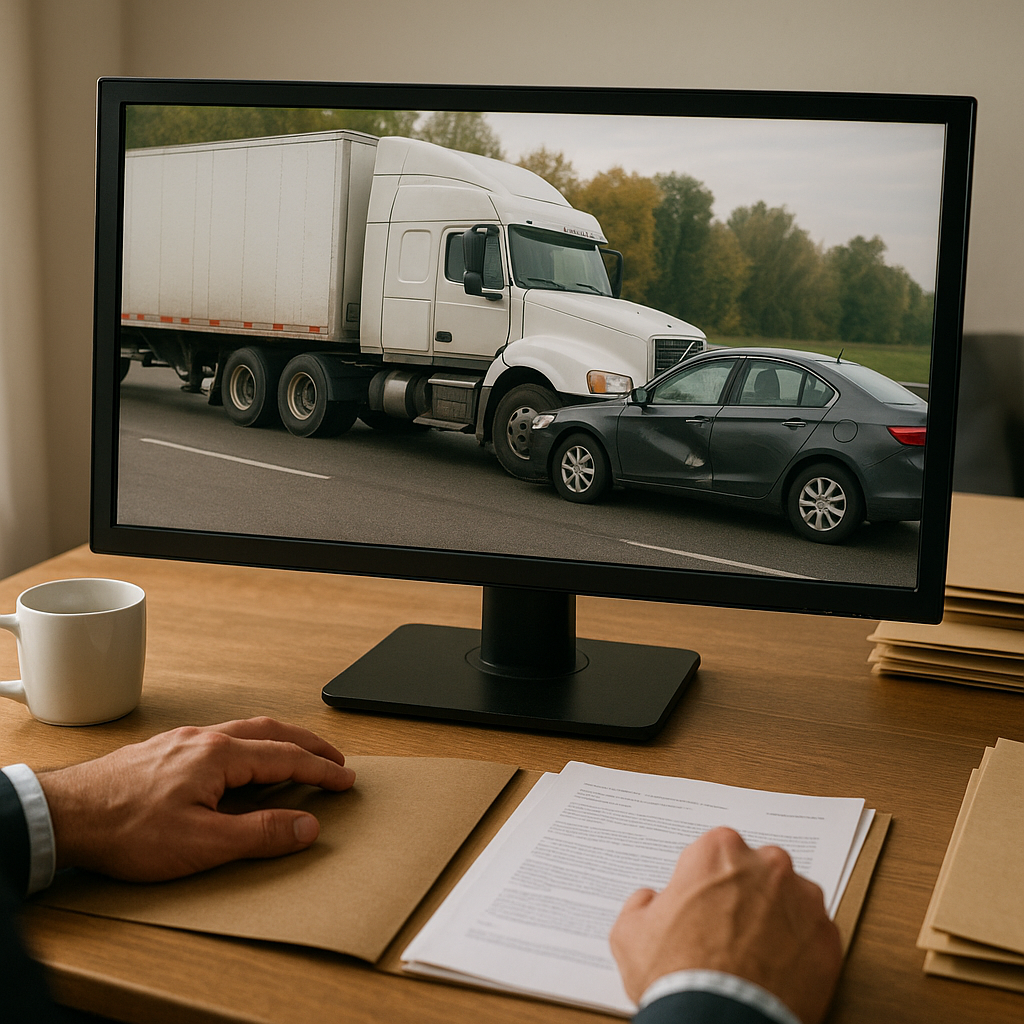
# How video footage impacts liability in truck accidents Video footage can be a turning point in determining who’s responsible after a serious crash—especially when commercial trucks are involved. In many cases, it provides the clearest, most objective account of what happened, helping insurers, attorneys, and courts evaluate fault, negligence, and damages. This is why **video evidence liability truck accident** cases often move faster (and resolve more decisively) than those relying only on witness statements. ## Why video footage matters in truck accident liability Truck accidents often involve conflicting accounts: the driver’s version, the passenger vehicle’s version, and third-party witnesses who may have only seen a split second. Video can: – Confirm lane position, following distance, and right-of-way – Show signals, braking behavior, and road conditions – Capture speed context and traffic flow – Reduce “he said, she said” disputes ## Common types of video evidence in truck accident cases Different sources can paint different parts of the picture. The most useful footage often comes from: ### 1) Dashcams (truck or passenger vehicle) Dashcams may show: – Sudden lane changes – Tailgating or unsafe following distance – Failure to yield or improper merging If the truck has inward-facing cameras, they may also indicate distraction or fatigue-related behavior. ### 2) Fleet and telematics camera systems Many carriers use multi-camera systems paired with GPS/telemetry. These can support or contradict claims about: – Speed and braking events – Hard turns or swerves – Time-stamped driving behavior ### 3) Traffic and roadway cameras City and highway cameras can help establish: – Signal phases at intersections – Vehicle placement across multiple lanes – Timing—who entered a space first and when ### 4) Surveillance footage (businesses, homes, parking lots) Footage from nearby locations can capture angles that dashcams miss, such as: – The exact point of impact – Pre-crash behavior (weaving, drifting, aggressive driving) – Post-crash actions (whether a driver stopped, hazards were used, etc.) ### 5) Bystander and phone video While often shaky or partial, it can still document: – Roadway layout – Weather and visibility – Statements made at the scene that later change ## How video shifts fault and liability determinations Video can strengthen or weaken liability arguments by addressing key legal questions: ### Negligence and comparative fault In many states, liability can be split. Video helps quantify shared responsibility—e.g., confirming a car merged too closely *and* the truck was speeding. ### Driver conduct and safety violations Footage may show conduct that supports negligence claims, including: – Unsafe lane changes – Failure to brake in time – Distracted driving indicators (when interior video exists) ### Company liability beyond the driver Video may expose operational issues that point to the trucking company, such as: – Policies encouraging aggressive schedules – Lack of proper supervision or monitoring – Patterned unsafe driving behavior captured over time ## The “missing video” problem (and why it matters) One major issue in **video evidence liability truck accident** disputes is how quickly footage can disappear. Some systems overwrite data in days or weeks. If relevant video is not preserved, it can limit what can be proven—sometimes leading to legal fights over whether evidence was intentionally or negligently lost. ## What makes video evidence persuasive (or vulnerable) Video is powerful, but it’s not always conclusive. Its impact depends on: – **Clarity and angle:** A blind spot view can still leave room for dispute. – **Time stamps and continuity:** Missing minutes can raise questions. – **Authenticity and chain of custody:** Courts want assurance it wasn’t edited. – **Context:** Video may not show speed accurately without reference points or paired telemetry. ## Bottom line Video footage often provides the most objective tool for determining fault in truck crashes, shaping how liability is assigned and how claims are valued. When available and properly preserved, **video evidence liability truck accident** footage can confirm critical facts, reduce disputes, and influence settlements or verdicts.

Illustration of # How video footage impacts liability in truck accidents Video footage can be a turning point in determining

How video footage impacts liability in truck accidents

Introduction to fault and responsibility in truck accidents

Determining fault after a truck accident often involves more than deciding which driver made a mistake. Commercial trucking collisions can include professional drivers, employers, maintenance providers, and other road users—each with different duties and standards. In this context, video evidence liability truck accident disputes may be clearer when footage provides an objective record of what occurred.

How fault is typically evaluated in this type of situation

Fault is generally assessed by comparing each party’s actions to the rules of the road and, for commercial drivers, applicable safety regulations and company policies. Investigators and insurers typically look at whether a driver acted reasonably under the circumstances and whether any violation contributed to the crash.

Key factors that influence who may be responsible

Common factors include lane position, right-of-way, following distance, signal use, speed relative to traffic, and roadway conditions. For trucks, additional considerations may involve hours-of-service compliance, safe turning practices, and whether the vehicle was properly maintained.

How different parties can share or shift liability

Many jurisdictions allow shared fault, meaning responsibility can be divided if multiple actions contributed to the collision. For example, a passenger vehicle may merge unsafely while a truck may be traveling too fast for conditions. In video evidence liability truck accident evaluations, footage can help identify how these contributions overlap rather than relying solely on competing narratives.

How evidence is used to determine fault

Video is one piece of a larger evidence set that may also include police reports, witness statements, vehicle damage patterns, electronic logging data, GPS/telematics, and inspection records. Useful footage can come from dashcams, fleet camera systems, traffic cameras, nearby business surveillance, or bystander recordings. When paired with time stamps or telemetry, video can help confirm timing, braking, and traffic flow—reducing uncertainty about who entered a lane or intersection first.

Common complications in determining liability

Video is not always complete or definitive. Camera angles may miss key moments, low resolution can obscure signals or lane markings, and missing segments can create ambiguity. Authenticity and chain-of-custody questions may also arise, especially if footage is edited or transferred multiple times. Another issue in video evidence liability truck accident cases is that some systems overwrite recordings quickly, making timely preservation important to avoid gaps in the record.

General awareness of how fault can impact outcomes and next steps

Fault findings can influence insurance decisions, settlement discussions, and whether claims focus on driver conduct, company practices, or equipment issues. Where comparative fault applies, even partial responsibility may affect financial recovery or exposure, depending on local rules and the evidence available.

Closing informational summary (neutral and balanced)

Video footage can significantly shape how liability is analyzed in truck accidents by clarifying disputed facts and supporting (or challenging) accounts of driver behavior and road conditions. However, its value depends on quality, context, and proper preservation. Used alongside other documentation, video evidence liability truck accident material can help decision-makers reach more evidence-based conclusions without assuming a single party is automatically at fault.