
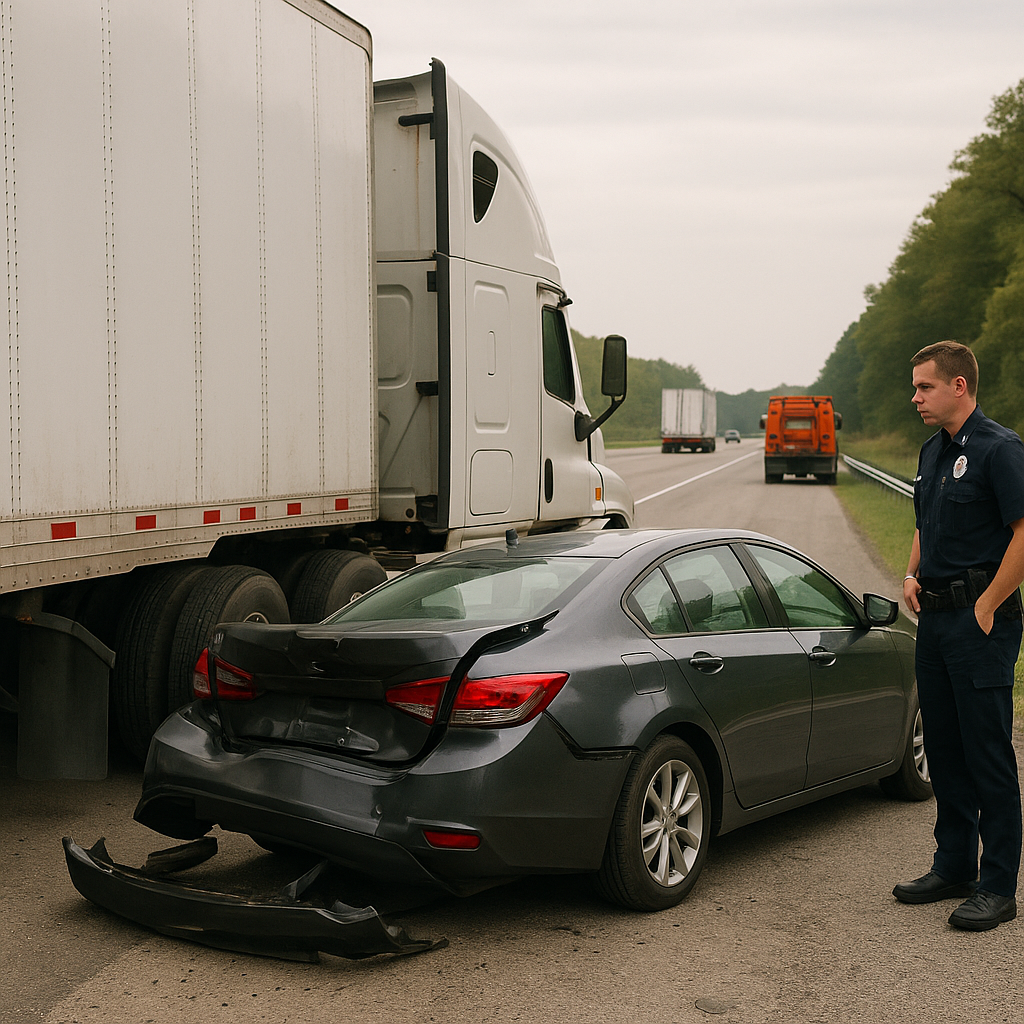
How liability differs in interstate trucking accidents
Introduction to fault and responsibility in truck accidents
Interstate truck crashes often raise different liability questions than typical passenger-vehicle collisions because responsibility can extend beyond the driver. In an interstate trucking liability accident, investigators may need to determine who controlled the driver’s work conditions, the truck’s roadworthiness, the cargo, and the safety decisions that shaped the trip. Because interstate trucking operates across state lines, both state negligence rules and federal trucking standards can become relevant.
How fault is typically evaluated in this type of situation
Fault is usually assessed by examining whether one or more parties failed to meet a reasonable safety standard and whether that failure contributed to the crash. In interstate trucking, that analysis often includes reviewing compliance with Federal Motor Carrier Safety Regulations (FMCSRs), along with company policies and industry practices. The goal is to connect specific decisions—driving behavior, maintenance choices, dispatch timing, or loading methods—to the events leading to the collision.
Key factors that influence who may be responsible
Several practical questions shape liability assessments:
– Who employed or controlled the driver’s work (motor carrier supervision, dispatch instructions, scheduling pressure)?
– Was the driver properly qualified, medically certified, and compliant with hours-of-service limits?
– Was the truck/trailer properly inspected and maintained (brakes, tires, lights, steering)?
– Was the cargo loaded, balanced, and secured according to safe practices and documentation?
– Were outside contractors involved (maintenance vendors, shippers, brokers, logistics coordinators)?
How different parties can share or shift liability
Unlike many car crashes, an interstate trucking liability accident may involve shared responsibility. A driver’s unsafe lane change might overlap with a carrier’s failure to enforce fatigue rules, or a rollover might involve both speed and improperly secured freight. Liability can also shift depending on contractual roles—such as separate ownership of the tractor or trailer, or third-party maintenance work that contributed to a mechanical failure.
How evidence is used to determine fault
Evidence tends to be more technical and time-sensitive in interstate trucking cases. Common sources include electronic logging device (ELD) data, engine control module (“black box”) information, dashcam footage, inspection reports, maintenance records, dispatch communications, and bills of lading. These records can help clarify what was known, what was required, and what actions were taken before the crash.
Common complications in determining liability
Interstate cases can involve multiple states tied to the crash location, the carrier’s headquarters, the driver’s residence, and the shipment route. That can affect where a claim may be filed and which state’s comparative-fault rules apply. Additionally, multiple insurers, corporate entities, and contractors may be involved, increasing the complexity of identifying who had responsibility for specific safety functions.
General awareness of how fault can impact outcomes and next steps
Because fault may be divided among several parties, outcomes can depend on how responsibility is allocated and how each role is documented. In an interstate trucking liability accident, establishing a clear timeline and preserving key records often plays a major role in understanding what happened and why.
Closing informational summary (neutral and balanced)
Interstate trucking crashes are evaluated through a layered review of driving conduct, company oversight, equipment condition, cargo handling, and regulatory compliance. Since responsibility may be shared across several parties and jurisdictions, liability determinations often require detailed records and a careful, fact-based analysis rather than assumptions about a single cause.