
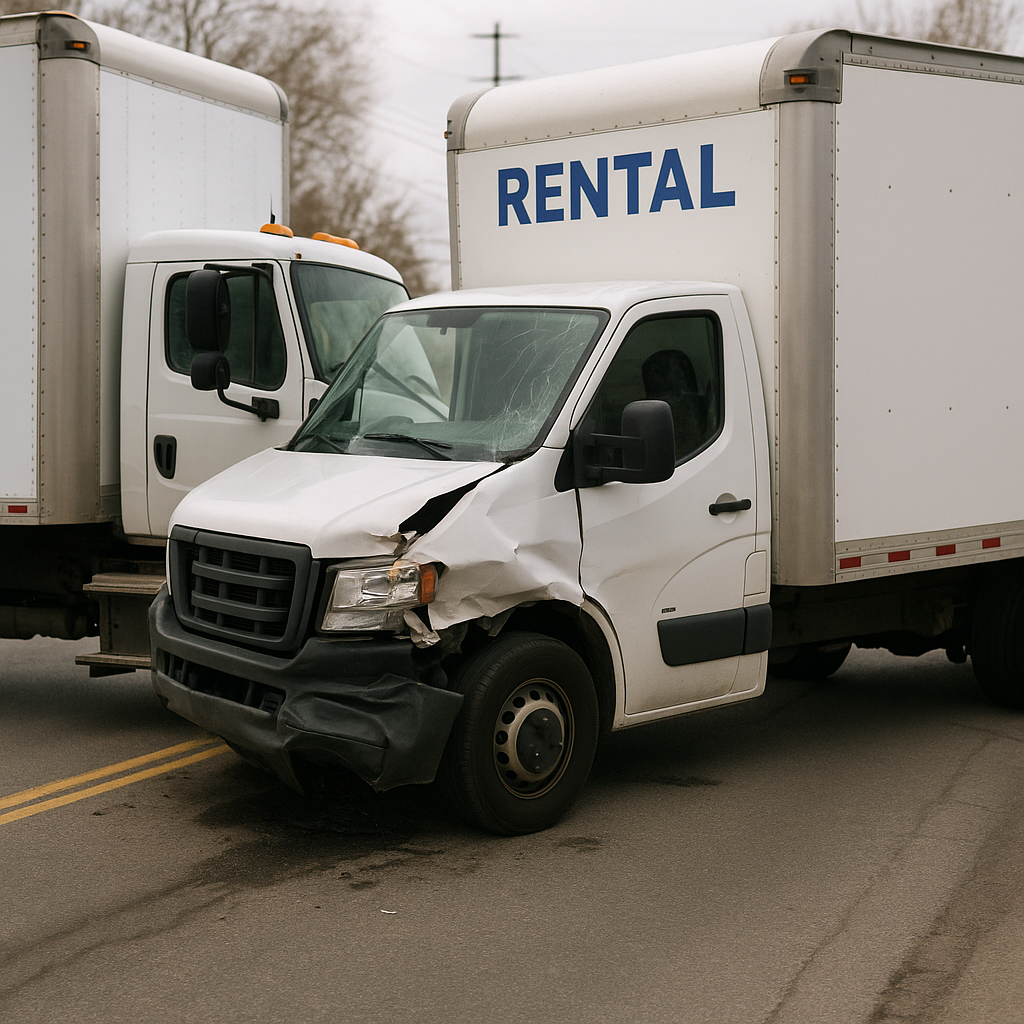
What happens if a truck accident involves a rental vehicle
Introduction to fault and responsibility in truck accidents
When a rental vehicle is involved in a truck crash, questions about who is responsible—and which insurance applies—often become more complex than in a typical passenger-car collision. A “rental truck liability accident” may involve multiple policies, contract terms, and potentially more than one responsible party. In most cases, the starting point is still the same: determining fault based on facts and evidence.
How fault is typically evaluated in this type of situation
Fault is generally evaluated by reviewing what happened before, during, and after the crash, and whether any driver or company failed to act with reasonable care under the circumstances.
Key factors that influence who may be responsible
Common factors include driving behavior (speed, following distance, lane changes), right-of-way issues, distraction or impairment indicators, and whether the truck was properly loaded and operated. If the rental truck was used for work purposes, decision-making by an employer or contractor (dispatch instructions, deadlines, or route requirements) can also be relevant.
How different parties can share or shift liability
Responsibility is not always limited to one person. Depending on the facts, liability may involve the rental truck driver, another driver, a business that hired or directed the driver, or entities tied to maintenance and repairs. In some situations, liability can be shared through comparative fault rules, meaning each party may carry a percentage of responsibility.
How evidence is used to determine fault
Evidence often determines how fault is assigned and how insurers evaluate claims. Key sources include the police report, witness statements, photographs of the scene and damage, dashcam footage, and vehicle data (when available). For rental vehicles, additional documentation becomes especially important—such as the rental agreement, proof of authorized drivers, and any records related to vehicle maintenance or prior issues.
Common complications in determining liability
Rental truck accidents frequently involve layered insurance. The driver’s personal or commercial auto policy may apply first, depending on policy terms and how the truck was used. Rental companies often provide state-required coverage, but it may be limited, secondary, or restricted by the contract. The rental agreement can also affect outcomes if it limits drivers, prohibits certain uses (like commercial hauling), or sets rules for towing and loading. Mechanical failure or defects can introduce additional parties, such as maintenance providers or manufacturers.
General awareness of how fault can impact outcomes and next steps
Fault findings can influence which insurance pays, how claims are negotiated, and whether additional policies—like employer coverage, umbrella coverage, or uninsured/underinsured motorist coverage—become relevant. Because multiple layers may apply, careful documentation typically matters more than usual.
Closing informational summary (neutral and balanced)
In a rental truck liability accident, responsibility is usually determined by standard fault analysis, but insurance priority and liability can shift based on rental terms, vehicle use (personal vs. business), and maintenance or defect issues. While many cases resolve through insurance evaluation, the involvement of rental contracts and multiple potential parties can make the process more detailed and fact-dependent.