
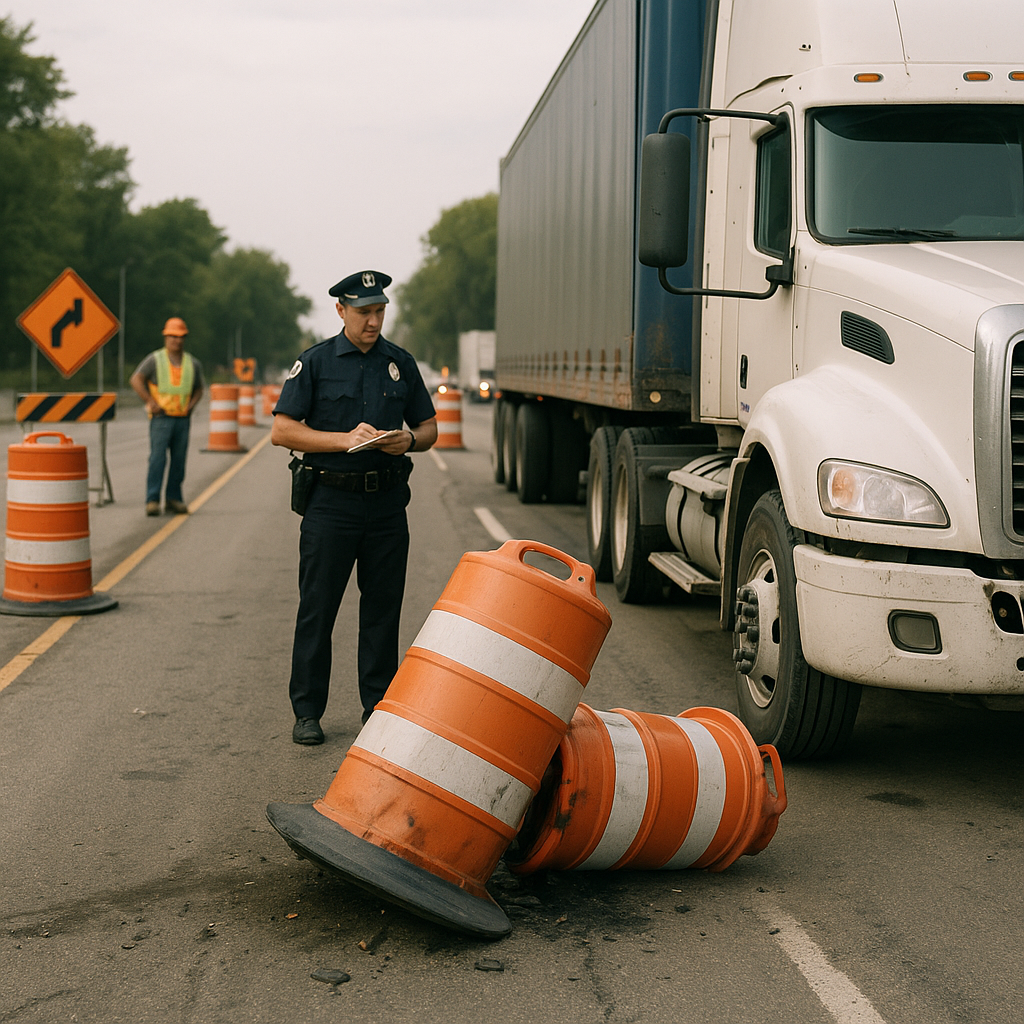
What happens if a truck accident occurs in a work zone
Introduction to fault and responsibility in truck accidents
A truck crash in a construction area can raise unique questions about fault because work zones change normal traffic patterns and add temporary safety rules. In a work zone liability truck accident, responsibility may involve more than just the drivers. Investigators often evaluate whether everyone involved—motorists, truck operators, and work-zone personnel—followed required safety practices designed to prevent sudden merges, rear-end collisions, and equipment-related hazards.
How fault is typically evaluated in this type of situation
Fault is generally assessed by comparing what happened to what should have happened under traffic laws, commercial driving standards, and work-zone safety requirements. Work zones often include reduced speed limits, narrowed lanes, shifting alignments, and temporary signs, which can affect what is considered “reasonable” driving behavior.
Key factors that influence who may be responsible
Common factors reviewed include:
– Truck speed versus posted work-zone limits and conditions
– Following distance in stop-and-go traffic and reaction time to sudden slowdowns
– Evidence of distraction, fatigue, impairment, or inattention
– Lane changes near merges, tapers, and barrier lines
– Visibility conditions such as lighting, dust, or obstruction from equipment
– Placement and condition of temporary traffic control devices (cones, barrels, arrow boards, signs)
How different parties can share or shift liability
Liability may be distributed among multiple parties when separate actions contribute to the crash. Potentially involved parties can include the truck driver, the trucking company (training, supervision, scheduling pressure, maintenance), construction contractors or subcontractors (setup and lighting), traffic control/flagger providers (direction and device placement), other motorists in chain-reaction collisions, and sometimes a public agency or project owner (design or oversight), which may involve special claim procedures.
How evidence is used to determine fault
Evidence often determines whether safety rules were followed at the time of the collision. Common sources include police reports, photos or video of signage and lane shifts, witness statements (including flaggers and workers), dashcam footage, truck ELD data, driver logs, maintenance records, and project documents such as traffic control plans and daily work logs.
Common complications in determining liability
These cases can be harder to evaluate because work-zone layouts may change daily, evidence can disappear quickly, and multiple insurance policies may apply. Disputes also arise over whether the work zone met required standards for warnings, taper lengths, and visibility—and whether a driver had enough time and information to react safely.
General awareness of how fault can impact outcomes and next steps
Fault findings can influence insurance decisions, the ability to pursue compensation, and how responsibility is divided under comparative fault rules in many jurisdictions. Work-zone violations and citations may be considered, but they do not always resolve liability by themselves.
Closing informational summary (neutral and balanced)
A work zone liability truck accident is typically evaluated by analyzing driver behavior, commercial trucking obligations, and whether the work zone was properly designed and managed for safety. Because multiple parties and time-sensitive evidence are common, outcomes often depend on careful documentation and a fact-based review of all contributing factors.