
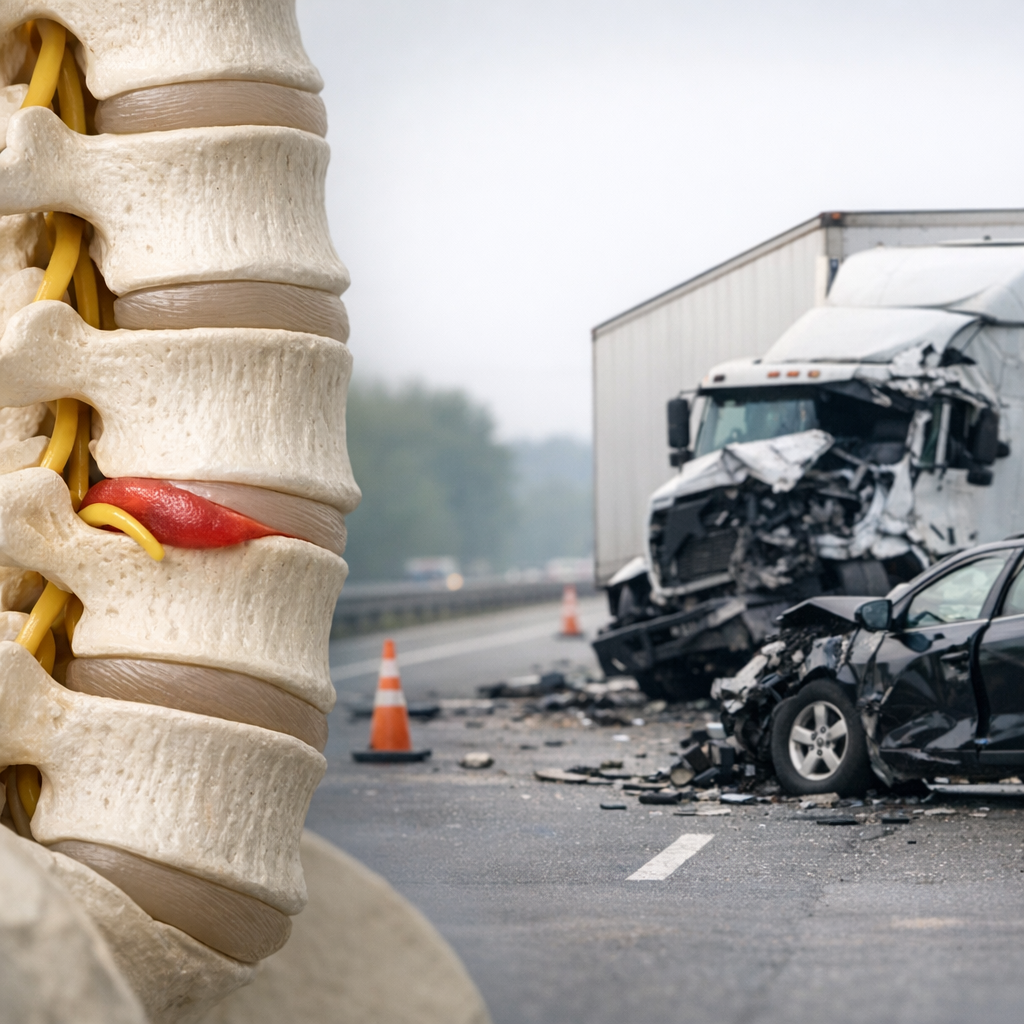
Disc Injuries Caused by Truck Crashes
Overview of the Injury
Disc injuries, particularly those resulting from truck crashes, are a significant concern due to their potential to cause long-term discomfort and impact quality of life. In these incidents, the spinal discs—composed of a soft inner gel and a tougher outer layer—may become damaged. This damage can manifest as herniation or bulging, where the disc protrudes beyond its usual boundary, potentially compressing nearby nerves.
Disc injuries can occur at any level of the spine, but the lumbar (lower back) and cervical (neck) areas are particularly vulnerable. Such injuries can lead to persistent pain and may require extended periods of recovery and rehabilitation.
How This Injury Commonly Occurs in Truck Accidents
Truck accidents can be especially severe due to the size and weight of these vehicles. Several factors make them prone to causing disc injuries:
Sudden Forceful Impact
The immense force generated during a collision with a truck can exert significant pressure on the spine, resulting in disc injury. This kind of impact can cause the disc to bulge or rupture, leading to nerve compression.
Whiplash Effect
In truck accidents, passengers may experience a rapid back-and-forth motion known as whiplash. This motion can strain the cervical spine, often leading to disc injuries in the neck region.
Jarring Movements and Improper Seat Positioning
The forceful and inconsistent movements during an accident can exacerbate the risk of disc injuries, particularly if occupants are not in optimal seating positions.
Typical Symptoms and Physical Effects
Disc injuries from truck crashes can present a wide range of symptoms, often depending on the severity and location of the injury. Common symptoms include:
– Localized Pain: Pain around the injury site, typically in the lower back or neck.
– Radiculopathy: Pain that radiates down the arms or legs, caused by nerve irritation.
– Numbness or Tingling: Sensations in extremities due to impaired nerve function.
– Muscle Weakness: A reduction in muscle strength, often resulting from nerve compression.
How the Injury Affects Daily Activities
Living with a disc injury can significantly impact daily life. Individuals may experience:
Mobility Limitations
Simple activities like walking, bending, or lifting can become painful and difficult, affecting a person’s ability to perform everyday tasks and maintain independence.
Work and Recreational Interruptions
Many find that their ability to work, especially in physically demanding roles, is compromised. Enjoying sports or recreational activities may also become challenging, impacting overall life satisfaction.
Sleep Disruptions
Pain and discomfort can lead to sleep disturbances, affecting energy levels and mood throughout the day.
Psychological Impact
The prolonged nature of recovery can contribute to emotional stress, impacting mental health and wellbeing.
Variations in Severity
Disc injuries can vary greatly in severity:
– Mild Injuries: May involve minor pain or discomfort, with a relatively swift recovery.
– Moderate Injuries: Could require more intensive treatment and pose longer-term challenges.
– Severe Injuries: Might necessitate surgery or lead to persistent pain, requiring a comprehensive treatment plan.
Factors That Influence Recovery
Several factors can affect the recovery process for individuals with disc injuries from truck crashes:
– Age and Overall Health: Younger, healthier individuals might recover more quickly.
– Speed and Nature of Treatment: Prompt and appropriate medical care can facilitate better outcomes.
– Injury Location and Severity: Injuries in certain spinal regions may be more complex to treat.
– Adherence to Rehabilitation: Engaging with prescribed physical therapy can significantly impact recovery trajectories.
A Calm, Informational Closing Section
Understanding the nuances of disc injuries caused by truck crashes is crucial for recognizing their potential impact on daily life. While these injuries can be challenging, knowledge about their symptoms and effects can aid in navigating the recovery journey. By grasping the dynamics of how such injuries occur and their variances in severity, individuals can be better equipped to manage their condition and work towards regaining their quality of life.