
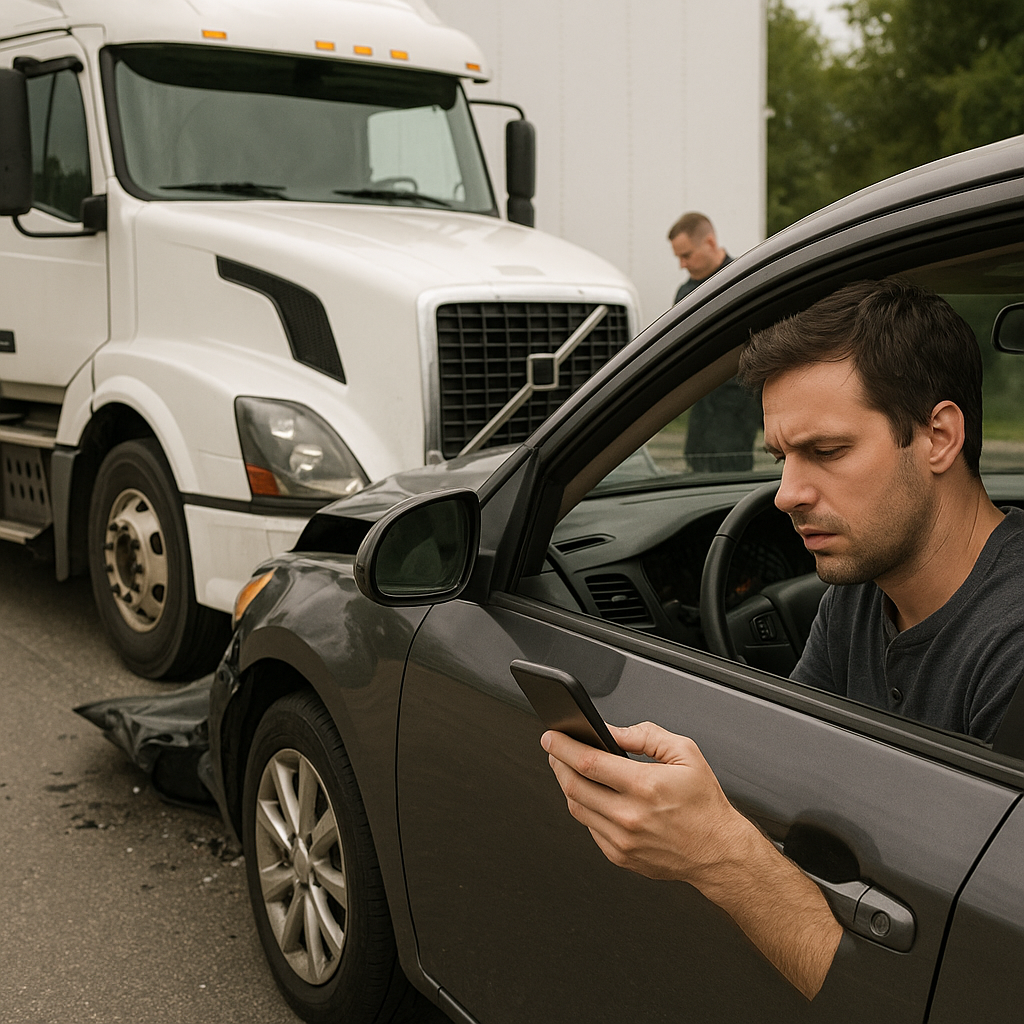
How distracted driving affects liability in truck accidents – Distracted driving liability truck accident: What it means for who’s at fault – Distracted driving liability truck accident claims: How evidence shifts responsibility – Distracted driving liability truck accident cases: Why trucking companies may share blame – Distracted driving liability truck accident lawsuits: Common defenses and how they’re challenged – Distracted driving liability truck accident investigations: Key proof that strengthens your case – Distracted driving liability truck accident settlements: What can increase or reduce compensation – Distracted driving liability truck accident fault: How comparative negligence can impact recovery – Distracted driving liability truck accident damages: Medical bills, lost wages, and more – Distracted driving liability truck accident timelines: What to do immediately after a crash – Distracted driving liability truck accident questions: What victims should ask a legal team
Introduction to fault and responsibility in truck accidents
In a distracted driving liability truck accident, fault is not decided by assumption—it is typically assessed through facts showing whether a driver or another party failed to act with reasonable care. Because truck crashes can involve professional drivers, company policies, and federal safety rules, responsibility may extend beyond the person behind the wheel.
How fault is typically evaluated in this type of situation
Fault is commonly evaluated by comparing what happened to applicable traffic laws, safety regulations, and standard driving practices. Investigators and insurers look for a clear link between distraction (such as phone use, in-cab device interaction, or other diverted attention) and the events leading to the collision.
Key factors that influence who may be responsible
Key considerations often include:
– Whether distraction can be supported by objective proof (device records, video, witness observations)
– Speed, following distance, lane position, and reaction time
– Compliance with trucking regulations (hours-of-service, required breaks, equipment rules)
– Road conditions and the actions of other drivers
How different parties can share or shift liability
A distracted driving liability truck accident may involve shared responsibility. Potentially involved parties can include the truck driver, another motorist, the trucking company, a maintenance contractor, or even a shipper/loader if cargo issues contributed. Liability may shift if evidence shows another factor—not distraction—was the primary cause.
How evidence is used to determine fault
Evidence often shapes outcomes in distracted driving liability truck accident claims. Common sources include police reports, electronic logging devices (ELDs), onboard telematics, dashcam footage, cell phone metadata, inspection/maintenance records, and witness statements. When these sources align, they can strengthen or weaken a fault narrative.
Common complications in determining liability
Disputes often arise over causation (was distraction decisive?), data interpretation (telematics/ELD context), and incomplete records. In lawsuits, defenses may include arguing the other driver’s actions contributed, the distraction is unproven, or an unavoidable hazard caused the crash—claims that are typically examined against timeline-based data and independent documentation.
General awareness of how fault can impact outcomes and next steps
Fault affects potential compensation, especially in comparative negligence states where recovery may be reduced if a claimant shares responsibility. Damages may include medical bills, lost wages, property loss, and other documented impacts. After a crash, timely documentation and preserving information can be important, since evidence may be overwritten or lost.
Closing informational summary (neutral and balanced)
A distracted driving liability truck accident is usually assessed through a multi-factor review of conduct, regulations, and verifiable evidence. Because multiple parties and data sources may be involved, liability is often a shared or contested issue. Victims commonly ask legal teams about evidence preservation, responsible parties, comparative negligence rules, likely timelines, and what documentation supports damages—questions that help clarify the process without predicting any specific result.