
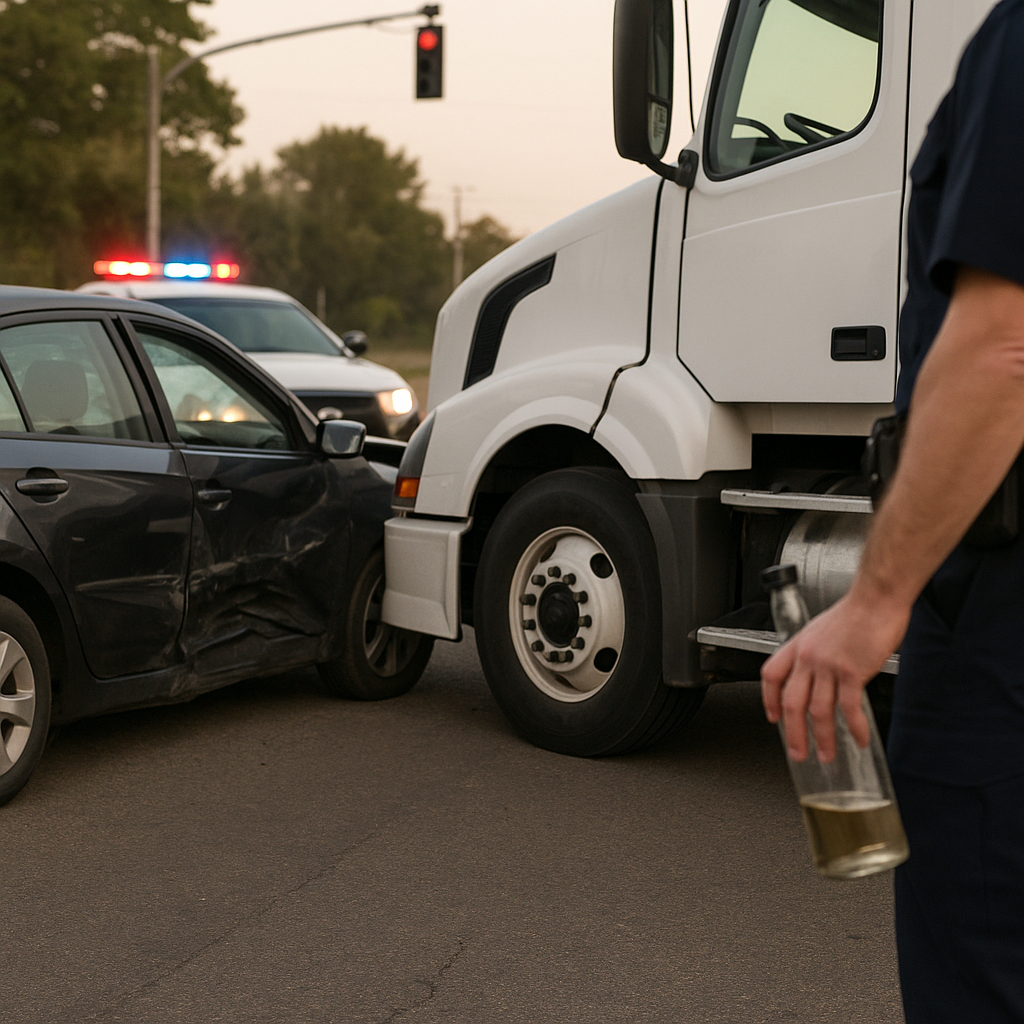
How DUI affects fault in truck accident cases
Introduction to fault and responsibility in truck accidents
Fault in a truck accident case is usually about identifying which actions (or failures to act) caused the crash and how responsibility should be allocated. When a commercial driver is suspected of driving under the influence, the analysis often becomes more direct because impairment can strongly connect unsafe conduct to the resulting collision. This can significantly shape dui truck accident liability, while still leaving room for other contributing causes.
How fault is typically evaluated in this type of situation
Fault is commonly assessed through negligence principles: whether a party owed a duty of care, breached that duty, and caused damages. DUI allegations matter because impaired driving often involves violating traffic and safety laws intended to prevent foreseeable harm.
Key factors that influence who may be responsible
Investigators and insurers (and, if litigated, courts and juries) typically look at:
– Whether impairment is supported by credible proof (BAC testing, officer observations, field sobriety results)
– Driving behavior leading up to impact (speed, lane position, reaction time, following distance)
– Road and visibility conditions that may have affected avoidance
– Mechanical issues (brakes, tires, lights) and maintenance history
– Compliance with commercial rules and internal company policies
How different parties can share or shift liability
Even if DUI is established, fault may still be divided under comparative fault rules in many jurisdictions. Another driver’s unsafe maneuver, a third party’s negligent maintenance, or a defect that reduced stopping ability could affect percentages of responsibility. In some cases, dui truck accident liability may extend beyond the driver to parties such as a trucking company (for hiring, supervision, training, or enforcement failures) or, more rarely, a shipper/broker if it exercised meaningful control over safety-related operations.
How evidence is used to determine fault
Evidence is often the deciding factor in whether DUI is merely alleged or actually proven and tied to causation. Common sources include body cam or dash cam footage, toxicology records, witness statements, police reports, crash reconstruction, ELD logs, GPS/telematics, dispatch records, and prior safety or disciplinary documentation.
Common complications in determining liability
Commercial crashes can involve overlapping causes: fatigue, distraction, improper loading, weather, work-zone design, or equipment defects. DUI may be central, but decision-makers still evaluate whether other factors contributed and how strongly they influenced the outcome.
General awareness of how fault can impact outcomes and next steps
Fault findings affect insurance coverage disputes, settlement leverage, and potential damages. In some states, DUI-related conduct may also raise the possibility of enhanced damages (such as punitive damages), depending on legal standards and the severity of the conduct.
Closing informational summary (neutral and balanced)
A DUI can powerfully influence how fault is determined in a truck accident because it often supports a presumption of negligence and can trigger stricter commercial compliance scrutiny. However, responsibility may still be shared among multiple parties depending on evidence and jurisdiction-specific fault rules. Because standards vary by state and facts, case-specific evaluation is typically required to understand dui truck accident liability in a given crash.