
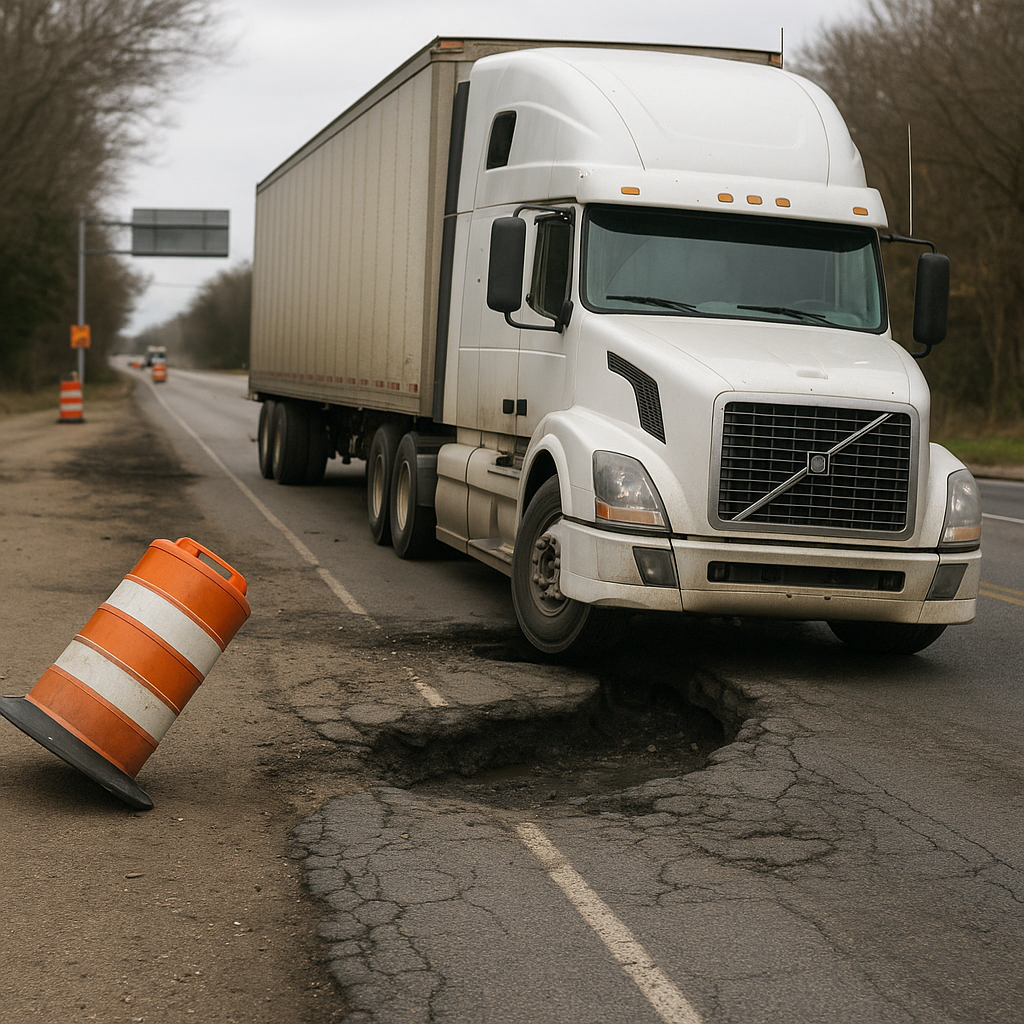
How road conditions affect liability in truck accidents
Introduction to fault and responsibility in truck accidents
When a crash involves a commercial truck, determining fault is often more complex than in a typical passenger-vehicle collision. Liability can depend on driver decisions, company policies, vehicle condition, and the roadway environment. In a road condition liability truck accident claim, the central question is whether a roadway hazard contributed to the collision—and who had a legal duty to prevent, repair, or warn about that hazard.
How fault is typically evaluated in this type of situation
Fault is generally assessed by examining whether a party acted reasonably under the circumstances and whether their actions (or inaction) contributed to the crash. Road conditions can matter because trucks have longer stopping distances, larger blind spots, and higher rollover risk, making them more sensitive to hazards like potholes, debris, inadequate signage, poor lighting, standing water, or work-zone layout issues.
Key factors that influence who may be responsible
Investigators and insurers often focus on a few core issues:
– Causation: Did the road condition actually contribute to loss of control, braking failure, or a chain reaction?
– Notice: Did anyone responsible know (or should they have known) the hazard existed?
– Time to respond: Was there a reasonable opportunity to fix the condition or provide warnings?
– Driver adjustment: Did the driver reduce speed, increase following distance, or otherwise adapt to visible or reported hazards?
How different parties can share or shift liability
Road conditions may broaden the list of potentially responsible parties:
– Truck driver: May still be partially responsible if they did not adjust to conditions (rain, poor visibility, work zones).
– Trucking company (motor carrier): May share fault if scheduling pressure, training gaps, or maintenance decisions increased risk.
– Maintenance providers or manufacturers: A roadway impact can expose issues like worn tires, brake problems, or suspension defects.
– Government agencies/road authorities: May be implicated if they failed to maintain roads or provide adequate warnings, though special notice rules and immunity defenses can apply.
– Construction contractors: Work-zone crashes often raise questions about traffic-control plans, signage placement, and debris management.
How evidence is used to determine fault
Evidence is used to connect the hazard to the crash and identify control and notice. Common sources include scene photos/video, dashcam footage, police reports, witness statements, truck ECM/“black box” data, driver logs and dispatch records, weather data, prior complaints, and work-zone plans or inspection logs.
Common complications in determining liability
These cases can be time-sensitive because road hazards may be repaired quickly. Disputes also arise over whether the hazard was “open and obvious,” whether the truck was operated appropriately, and whether multiple factors (weather, traffic, equipment condition) contributed simultaneously.
General awareness of how fault can impact outcomes and next steps
Many jurisdictions use comparative fault rules, meaning responsibility may be divided among multiple parties. As a result, the presence of a road defect may reduce, increase, or simply redistribute liability depending on the facts and available evidence.
Closing informational summary (neutral and balanced)
A road condition liability truck accident analysis often involves more than evaluating driver behavior. Road maintenance, work-zone practices, vehicle condition, and notice of hazards can all affect how fault is allocated. Because outcomes depend heavily on documentation and timing, these claims are typically driven by detailed, fact-specific investigation rather than assumptions about a single cause.