
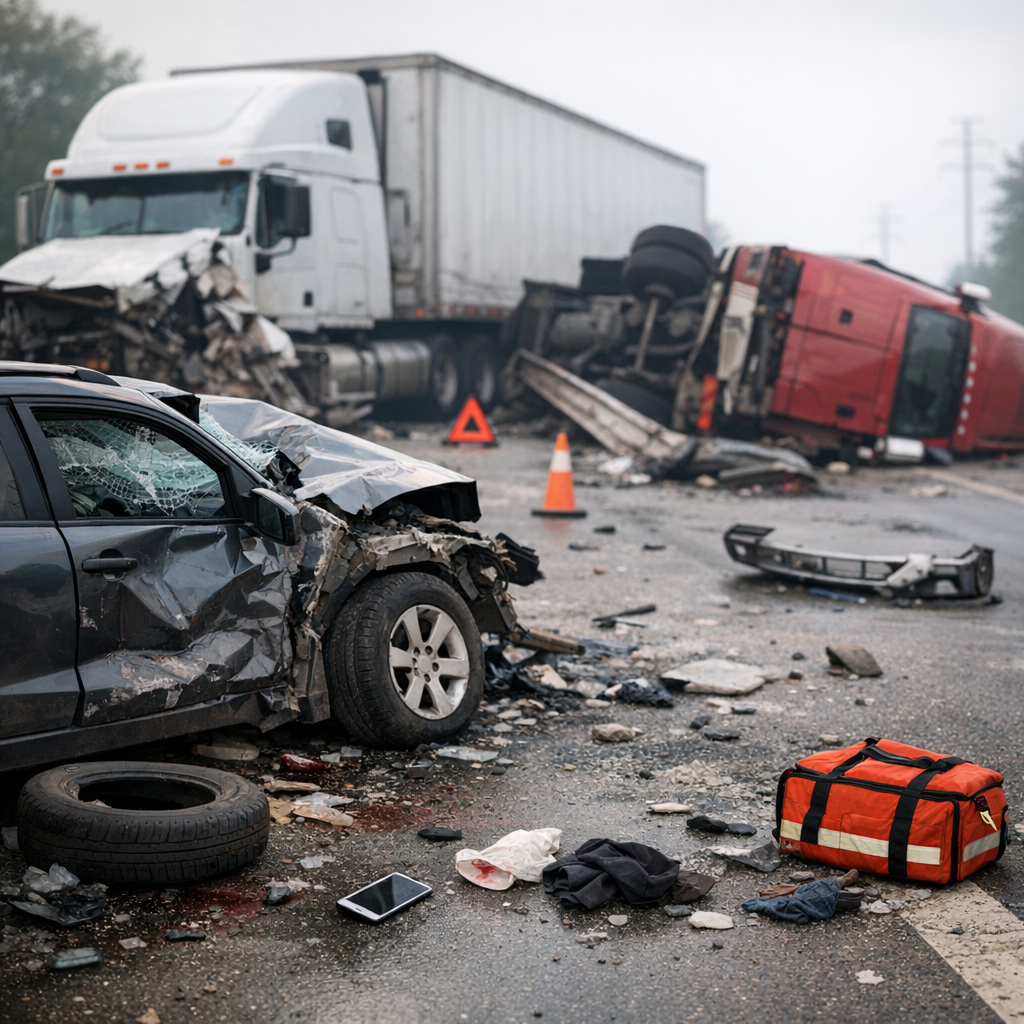
Multiple Injury Trauma from Truck Accidents
Overview of the Injury
Multiple injury trauma refers to the simultaneous occurrence of several injuries, typically resulting from a severe impact or accident. In the context of truck accidents, these injuries are often compounded due to the sheer size and weight of the vehicles involved. This type of trauma can lead to complex medical challenges, with potential ramifications on a person’s health and lifestyle.
How This Injury Commonly Occurs in Truck Accidents
Truck accidents can cause significant trauma due to a variety of factors like high speeds, the massive weight of the vehicle, and the sheer force during collisions. The occupants of smaller vehicles often face greater risks, and the structural damage inflicted can lead to multiple injuries at once.
Typical Scenarios
1. Highway Collisions: On highways, higher speeds amplify the impact of collisions. Trucks typically travel long distances at these speeds, and any mishap can cause devastating multi-injury trauma.
2. Rear-End Incidents: Given their weight, trucks require more distance to stop. A failure to gauge this distance properly often results in severe rear-end collisions, leading to multiple injuries.
3. Side-Impact Crashes: Known as T-bone collisions, these can happen when a truck collides with the side of another vehicle, causing significant bodily harm to passengers on the impacted side.
Typical Symptoms and Physical Effects
Multiple injury trauma can manifest in various ways, depending on the nature and severity of the injuries sustained. Common symptoms might include:
– Fractures and Broken Bones: High-force impacts often result in broken limbs or ribs.
– Head and Brain Injuries: Concussions and traumatic brain injuries can occur if the head is jolted or strikes a hard surface.
– Internal Injuries: Damage to organs can happen due to the compression of the body in tight spaces, or the jarring force applied internally.
– Lacerations and Bruising: Cuts and bruises are common due to shattering glass or being struck by loose objects inside the vehicle.
How the Injury Affects Daily Activities
The aftermath of multiple injury trauma can significantly impact a person’s daily life. Here are some potential effects:
– Mobility Challenges: Fractures and muscle injuries can limit movement, affecting daily tasks such as walking, driving, or even simple house chores.
– Cognitive Effects: Head injuries may lead to cognitive challenges, impacting memory, concentration, and even emotional regulation.
– Chronic Pain: Injuries might result in prolonged pain, necessitating ongoing pain management strategies.
– Emotional Strain: Coping with multiple traumas can lead to stress, anxiety, and depression, affecting mental well-being and social interactions.
Variations in Severity
The severity of injuries can greatly vary based on several elements:
– Impact Force: Higher speed collisions typically result in more severe injuries.
– Use of Safety Equipment: The presence and use of seat belts and airbags can influence injury severity.
– Pre-existing Health Conditions: Individuals with prior health issues may experience more severe outcomes or complications.
Factors That Influence Recovery
Recovery from multiple injury trauma is influenced by a variety of factors:
– Timeliness of Medical Intervention: Quick medical response can mitigate the severity of injuries.
– Overall Health: A person’s general health pre-accident can affect recovery speed and effectiveness.
– Rehabilitation and Support: Access to rehabilitation services and strong social support may enhance recovery prospects.
In conclusion, recovering from multiple injury trauma due to truck accidents is a complex process. The extent of injuries can range widely, with numerous influences playing a role in the healing process. While the challenges are significant, understanding the nature of these injuries, how they occur, and their effects on daily life is a step toward addressing the aftermath in an informed manner.