# How defective truck parts cause liability Defective components can turn an ordinary truck trip into a catastrophic incident—and when they do, **defective truck parts liability** often hinges on who designed, manufactured, installed, maintained, or ignored the problem. Below are the most common ways faulty parts create legal exposure and how responsibility is typically determined. ## 1) Defects that lead directly to crashes When a part fails, it can cause loss of control, delayed stopping, or sudden mechanical breakdowns. Common examples include: – Brake system failures (air brakes, calipers, lines, chambers) – Tire and wheel defects (tread separation, blowouts, rim failures) – Steering and suspension failures (tie rods, steering gears, kingpins) – Coupling and trailer connection failures (fifth wheel, hitch, safety chains) – Lighting and visibility defects (headlights, brake lights, reflective tape) If that failure contributes to a collision, it opens the door to claims based on product defects and negligence. ## 2) Product liability: when the part itself is defective A defective part can trigger product liability claims against parties in the supply chain (manufacturer, distributor, retailer). Defects generally fall into three buckets: – **Design defects:** The part is inherently unsafe even when made correctly (e.g., a brake component designed with insufficient tolerance for heat). – **Manufacturing defects:** The design is fine, but a specific batch is flawed (e.g., contaminated materials, improper welding, incorrect assembly). – **Failure to warn/instructions defects:** Inadequate warnings or installation instructions (e.g., no warning about required torque specs or maintenance intervals). This is a core driver of **defective truck parts liability**, because the focus is on the product and how it reached the road in an unsafe condition. ## 3) Negligence and maintenance liability: when people or companies contribute Even with a flawed part, liability can expand if others made the situation worse, such as: – Skipping inspections or ignoring warning signs (noise, vibration, wear indicators) – Installing incompatible parts or using incorrect procedures – Failing to follow recall notices or service bulletins – Poor fleet maintenance programs or inadequate mechanic training This can place responsibility on trucking companies, maintenance contractors, repair shops, or even individual technicians. ## 4) Recalls and prior knowledge increase exposure If a defect was known—or should have been known—liability risk rises. Evidence that can shift or strengthen fault includes: – Recall notices and whether they were acted upon – Prior similar incidents, complaints, or internal testing data – Service bulletins, warranty claims, and repair histories Failing to address a known defect can support claims for punitive damages in some jurisdictions. ## 5) Causation: linking the defect to the crash In defective-part cases, proving the failure caused the harm is essential. This often involves: – Preserving the failed part and documenting its condition – Downloading vehicle data (ECM/EDR) and maintenance logs – Accident reconstruction and metallurgical/engineering analysis – Reviewing installation records and torque/fitment specs Without a clear causal link, **defective truck parts liability** becomes harder to establish—even if the part looks suspicious. ## 6) Shared fault: multiple parties can be liable Truck-part cases frequently involve overlapping responsibility: – A manufacturer for a defective component – A distributor for selling it – A repair shop for improper installation – A fleet for poor maintenance or ignoring recalls – A driver for operating with known mechanical issues Many claims are resolved through comparative fault or apportionment, where each party pays according to its share of responsibility. ## 7) Damages and legal consequences When defective parts cause injuries or deaths, claims may seek: – Medical costs, lost income, and long-term care – Property damage and business interruption – Pain and suffering – In some cases, punitive damages (especially with knowledge or concealment) Regulatory consequences (DOT/FMCSA violations, civil penalties) can also compound exposure for fleets and maintenance providers. ## Conclusion “How defective truck parts cause liability” comes down to one key issue: when a component fails, liability can attach to the product maker, the parties who handled it, and those responsible for inspection and repair. Because **defective truck parts liability** is often shared across multiple actors, proving defect type, causation, and knowledge is central to determining who pays—and how much.

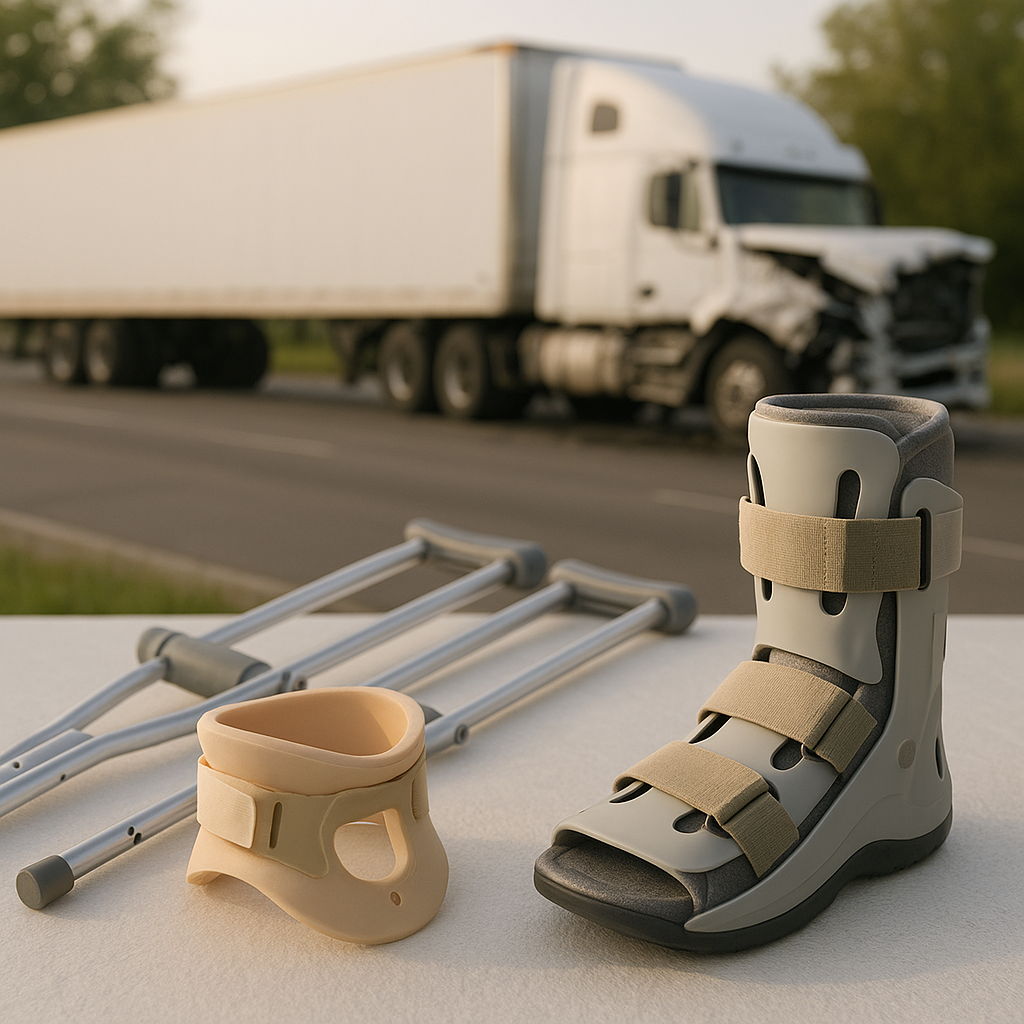
orthopedic injury truck illustration for Orthopedic Injuries from Truck Accidents

Orthopedic Injuries from Truck Accidents

Overview of the Injury

Orthopedic injuries are a common consequence of truck accidents, involving damage to the musculoskeletal system. This includes bones, joints, ligaments, tendons, and muscles. Such injuries can range from minor fractures to severe trauma requiring long-term rehabilitation.

These injuries can profoundly affect a person’s mobility and quality of life. In the context of truck accidents, the sheer size and weight of trucks mean that the potential impact can lead to more serious orthopedic damage than other types of vehicle collisions.

How This Injury Commonly Occurs in Truck Accidents

Truck accidents present unique hazards due to the vehicles’ large size and considerable weight. When involved in an accident, the force generated can cause significant stress on the body.

Orthopedic injuries may occur in several scenarios during truck accidents:

Direct Collision: A head-on impact can cause fractures or dislocations as the body absorbs the shock.

Side Impact or T-bone Collisions: These often result in complex fractures, particularly in the rib cage, pelvis, and lower limbs.

Rollovers: When a truck rolls over, it can lead to severe spinal and limb injuries due to the body’s twisting and compressive forces.

Under-ride Accidents: Smaller vehicles can become wedged under a truck, potentially leading to catastrophic orthopedic injuries due to the compressed space.

Typical Symptoms and Physical Effects

Orthopedic injuries can manifest in various ways, depending on the severity and type of injury:

Pain and Swelling: Initial symptoms often include acute pain and noticeable swelling around the affected area.

Bruising: Discoloration and tenderness can occur as blood vessels are damaged beneath the skin.

Mobility Loss: Severe injuries may lead to a temporary or permanent reduction in the range of movement.

Visible Deformity: Some injuries, such as fractures or dislocations, can result in misalignment that is visible externally.

How the Injury Affects Daily Activities

Orthopedic injuries can significantly disrupt daily life, impacting one’s ability to perform routine tasks. Some common challenges include:

Movement Limitations: Difficulty in walking, standing, or sitting can affect both work and leisure activities.

Dependence on Mobility Aids: Depending on the injury severity, individuals may require crutches, wheelchairs, or braces.

Daily Care Adjustments: Simple tasks like dressing, cooking, or personal hygiene may require substantial modifications or assistance.

Work and Employment Impacts: Such injuries can necessitate time away from work, potentially impacting financial stability and career progression.

Variations in Severity

Orthopedic injuries can vary widely in severity, from minor strains to complex fractures requiring surgical intervention. The severity often depends on factors such as the speed of impact, the nature of the collision, and the individual’s physical condition.

Factors that Influence Recovery

Several factors can influence the recovery process for orthopedic injuries:

Age and General Health: Younger and healthier individuals may recover more quickly. Chronic health issues can impede the healing process.

Type and Location of Injury: Some areas, such as weight-bearing joints or the spine, may take longer to heal and require specialized treatment.

Timeliness of Medical Intervention: Immediate diagnosis and treatment can enhance recovery prospects, preventing complications.

Rehabilitation Efforts: Physical therapy and rehabilitation play crucial roles in restoring function and mobility.

A Calm, Informational Closing Section

Understanding orthopedic injuries from truck accidents is essential for appreciating the potential impact on individuals’ lives. These injuries can be complex, requiring comprehensive medical evaluation and rehabilitation efforts.

While every individual’s experience is unique, knowledge of typical symptoms and challenges can aid in recognizing the needs of those affected. Emphasizing awareness and support can foster a compassionate environment for those navigating recovery.