
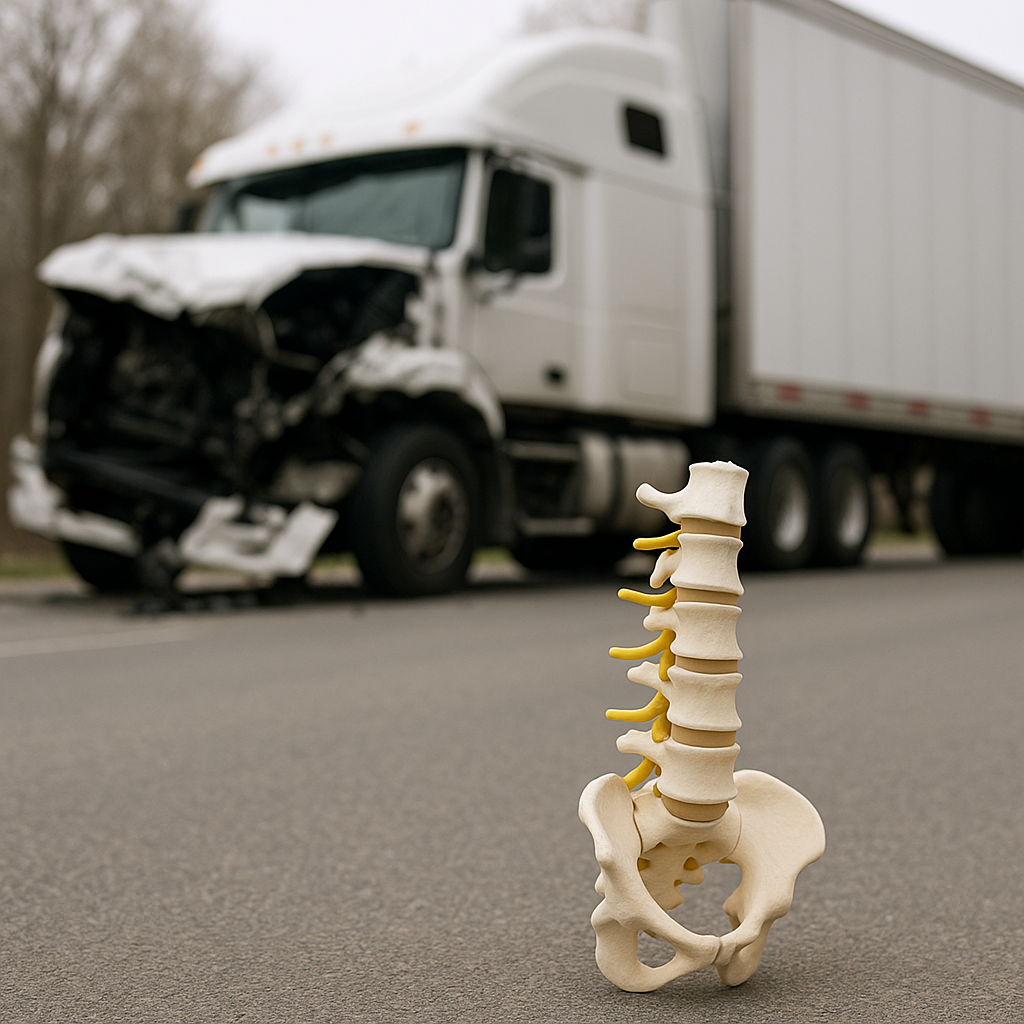
Spinal Instability After Truck Crashes
Overview of the Injury
Spinal instability is a serious condition that can arise after traumatic incidents, such as truck crashes. The spinal column, which provides essential support and flexibility to the human body, comprises vertebrae, intervertebral discs, ligaments, and muscles. When these components are damaged, they can no longer maintain the structural integrity required to protect the spinal cord and support the body efficiently. This lack of stability can lead to significant pain, discomfort, and long-term disability if not properly addressed.
How This Injury Commonly Occurs in Truck Accidents
Truck accidents are often high-impact events due to the sheer size and weight of the vehicles involved. The force exerted during a collision can exceed what the human body is designed to withstand, particularly impacting the spine. Here’s how spinal instability often develops in such circumstances:
– Severe Impact: The sudden jolt during a crash can displace or fracture vertebrae. This movement can compromise the spine’s ability to stay aligned and function properly.
– Whiplash Effect: Rapid back-and-forth movements of the neck, commonly known as whiplash, can strain ligaments and muscles. When the supportive structures are overstressed, the overall stability of the spine can be affected.
– Direct Trauma: Direct trauma to the back or neck during a truck crash can lead to immediate instability, especially if the spinal column is directly compressed or struck.
Typical Symptoms and Physical Effects
Spinal instability can manifest through a variety of symptoms. Recognizing these symptoms is crucial for early intervention and management:
– Chronic Pain: persistent pain in the neck or back is a common indicator of potential instability.
– Muscle Spasms: Involuntary contractions can occur as the body attempts to stabilize the affected area.
– Nerve Pain: Shooting pains or numbness radiating down the arms or legs often indicate nerve involvement.
– Reduced Mobility: Difficulty in moving or performing tasks that involve bending, lifting, or twisting can suggest a compromised spine.
– Weakness: A loss of strength in the arms or legs may point to nerve or muscle impairment related to the injury.
How the Injury Affects Daily Activities
Living with spinal instability can significantly impact day-to-day life. Here are some common challenges faced by individuals dealing with this condition:
– Limited Physical Activity: Routine tasks such as walking, climbing stairs, or sitting for extended periods may become challenging, requiring frequent rest and adjustments.
– Work Disruptions: Depending on the severity, some individuals may find it difficult to perform job-related duties, especially those requiring physical exertion.
– Sleep Disturbances: Pain and discomfort can disrupt restful sleep, leading to fatigue and a decreased ability to focus or enjoy daily activities.
– Emotional and Psychological Impact: Chronic pain and reduced mobility can lead to stress and anxiety, impacting overall well-being and quality of life.
Variations in Severity
The severity of spinal instability can vary significantly from mild discomfort to severe disability. Factors influencing these variations include the extent of the injury, the specific areas of the spine affected, and the individual’s overall health. In some cases, conservative treatments may suffice, while others might require surgical intervention.
Factors That Influence Recovery
Recovery from spinal instability can be a complex process influenced by several factors:
– Age and General Health: Younger, healthier individuals may experience quicker recovery times.
– Prompt Diagnosis and Treatment: Early intervention can prevent further complications and facilitate better outcomes.
– Rehabilitation Adherence: Following medical guidelines and engaging in physical therapy can aid in rebuilding strength and improving stability.
– Lifestyle Adjustments: Implementing ergonomic solutions and modifying daily activities can support recovery and prevent re-injury.
Conclusion
Understanding spinal instability, particularly after truck crashes, is crucial for appreciating the challenges faced by those affected. The condition requires careful management to maintain quality of life and functionality. Knowledge of the symptoms, effects on daily life, and factors influencing recovery can empower individuals to seek appropriate care and make informed decisions. While recovery varies, recognizing the condition’s seriousness is the first step toward managing it effectively.