
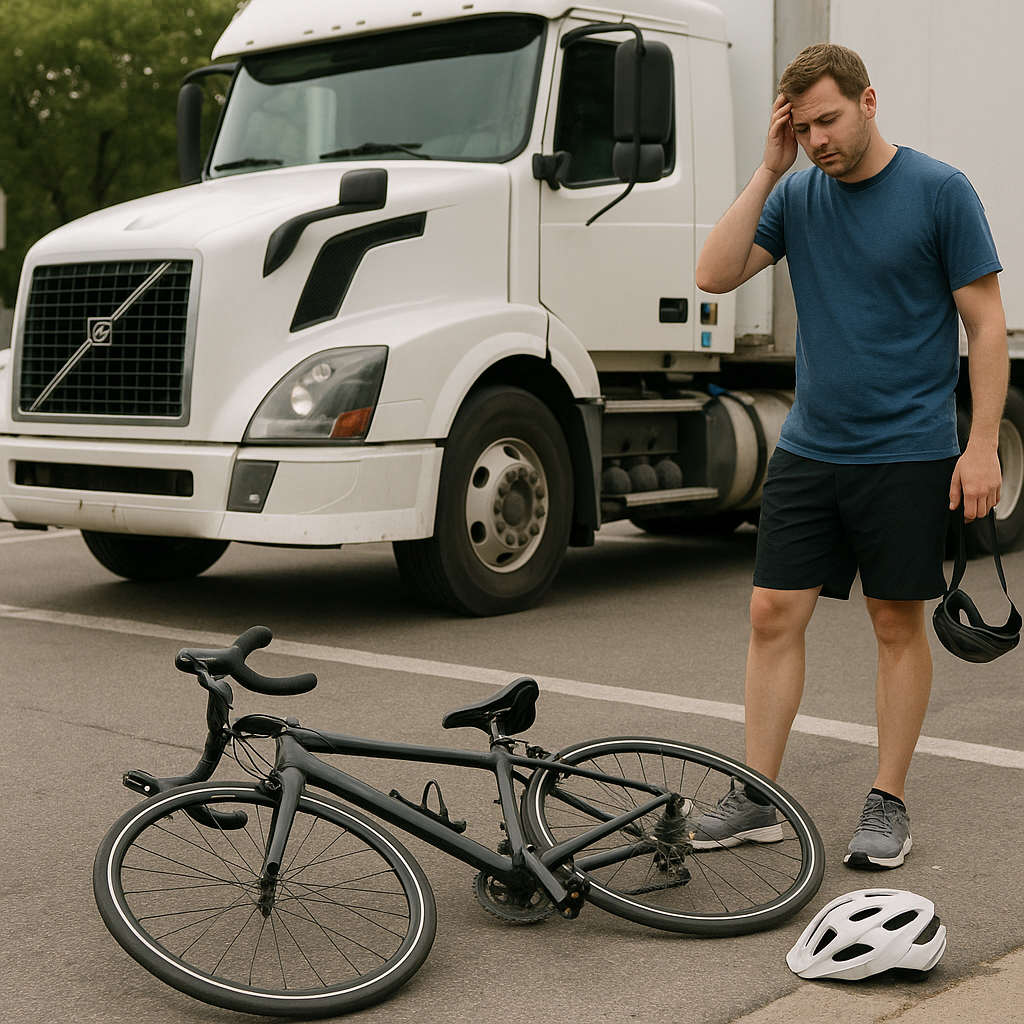
What happens if a truck accident involves cyclists
Introduction to fault and responsibility in truck accidents
When a truck accident involves a cyclist, fault and financial responsibility are usually evaluated through a combination of traffic-law compliance and negligence principles. In practice, cyclist liability truck accident questions often center on who had the right of way, who failed to use reasonable care, and what evidence supports each version of events. Because commercial trucks operate under additional safety rules and may involve multiple organizations, responsibility can be broader than in typical vehicle collisions.
How fault is typically evaluated in this type of situation
Investigators and insurers commonly review whether each party followed applicable road rules and whether anyone’s actions created an unreasonable risk. The goal is not only to identify a single “cause,” but to understand how decisions leading up to the collision contributed to it.
Key factors that influence who may be responsible
Several recurring issues shape cyclist liability truck accident determinations:
– Right of way and traffic signals: Whether either party ran a red light, ignored a stop sign, or failed to yield.
– Lane positioning and passing distance: Whether the truck provided required clearance when passing and whether the cyclist rode predictably and within permitted areas.
– Visibility and blind spots: Whether the cyclist used lights/reflectors when required and whether the driver checked mirrors and blind spots before turning or merging.
– Speed and distraction: Any speeding, phone use, or inattention by either party.
– Improper turns and merge hazards: Trucks may make wide right turns, left cross turns, or unsafe lane changes that can place cyclists in conflict zones.
How different parties can share or shift liability
Responsibility may involve more than the cyclist and the driver:
– Truck driver: Potential liability for unsafe driving, rule violations, or inadequate scanning.
– Cyclist: Potential liability for wrong-way riding, running signals, or unsafe lane changes, affecting cyclist liability truck accident outcomes.
– Trucking company: Possible responsibility tied to training, scheduling pressures, supervision, hiring practices, or policy compliance.
– Maintenance providers/manufacturers: If mechanical failures or defective parts contributed.
– Government entities: If road design, signage, or maintenance issues played a role, often under special procedures and deadlines.
How evidence is used to determine fault
Fault assessments rely on corroboration. Commonly reviewed materials include police reports, witness statements, scene photos, damage patterns, medical records, dashcam/traffic video, truck “black box” and telematics data, driver logs and hours-of-service records, and cyclist GPS or helmet-camera footage. Timing matters because some digital data can be overwritten.
Common complications in determining liability
These cases can be complex due to multiple potentially responsible parties, specialized trucking regulations, and disputes over visibility, turning paths, and reaction time. Conflicting witness accounts and incomplete video coverage can also make reconstruction difficult.
General awareness of how fault can impact outcomes and next steps
Compensation discussions often include medical costs, lost income, property damage (such as bike replacement), and other documented losses. In many jurisdictions, shared fault reduces recovery under comparative negligence rules, making cyclist liability truck accident findings especially influential.
Closing informational summary (neutral and balanced)
In truck–cyclist collisions, liability typically depends on traffic-law compliance, reasonable care, and strong supporting evidence. Because trucks involve blind spots, turning dynamics, and multiple stakeholders, determining fault may require a detailed, time-sensitive review of records, data, and roadway conditions.