
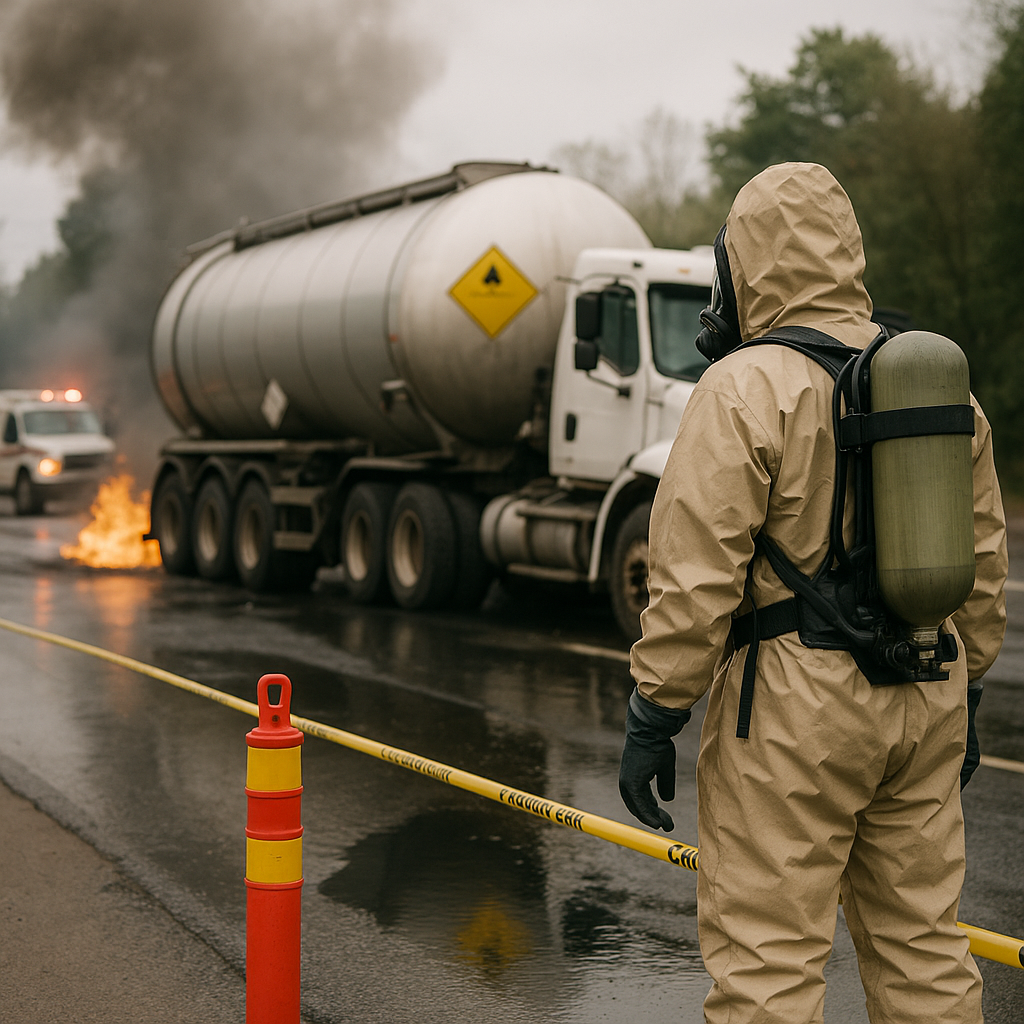
What happens if a truck accident involves hazardous materials
Introduction to fault and responsibility in truck accidents
When a truck accident involves hazardous materials, the incident is treated as more than a traffic collision—it can become a regulated public safety and environmental event. That shift affects how fault is examined, because investigators may evaluate not only driving behavior but also compliance with hazmat rules governing packaging, labeling, routing, securement, training, and reporting. As a result, a hazmat liability truck accident claim often involves a broader set of questions and potentially more than one responsible party.
How fault is typically evaluated in this type of situation
Fault is usually assessed by combining standard crash analysis (who caused the impact) with hazmat-specific analysis (why the material leaked, ignited, or required emergency action). Investigators may look at whether the release was caused by the collision itself, by a failure in containment, or by preventable handling errors before the truck ever reached the road.
Key factors that influence who may be responsible
Common factors include:
– Driver conduct (speed, fatigue, distraction, lane violations, following distance)
– Carrier practices (maintenance, dispatch pressure, training, route planning)
– Hazard classification and documentation accuracy (shipping papers, placards)
– Load securement and transfer procedures (valves, seals, tie-downs, loading methods)
– Container integrity (tank condition, defective parts, prior damage)
How different parties can share or shift liability
Unlike many standard crashes, responsibility may be divided among multiple entities. A driver may be at fault for causing the collision, while a shipper or loader may be scrutinized for incorrect classification or poor packaging, and a maintenance provider or manufacturer may be examined if a mechanical or container failure worsened the release. This shared-responsibility framework is a common feature of hazmat liability truck accident investigations.
How evidence is used to determine fault
Evidence can include police reports, crash-scene measurements, dashcam footage, black-box/telematics data, driver logs, inspection records, and maintenance histories. Hazmat-specific evidence often involves shipping papers, placard identification, chain-of-custody records, and post-crash testing of valves, tanks, or drums to determine whether a defect or improper handling contributed.
Common complications in determining liability
These cases can become complex due to multiple contractors, overlapping regulations, and time-sensitive cleanup activities that may alter physical evidence. In addition, regulatory agencies may run parallel investigations, and the findings can influence how a hazmat liability truck accident is evaluated.
General awareness of how fault can impact outcomes and next steps
Fault findings can affect insurance coverage, cost allocation for cleanup and remediation, and the scope of claims related to health impacts, property contamination, business interruption, or relocation expenses. Outcomes vary based on the facts, available documentation, and investigative conclusions.
Closing informational summary (neutral and balanced)
Hazardous-material truck crashes introduce additional layers of responsibility because regulators and investigators examine both the collision and the hazardous cargo system behind it. Determining hazmat liability truck accident responsibility typically requires careful review of driving behavior, carrier compliance, shipping and loading practices, and container performance—often across multiple parties.