
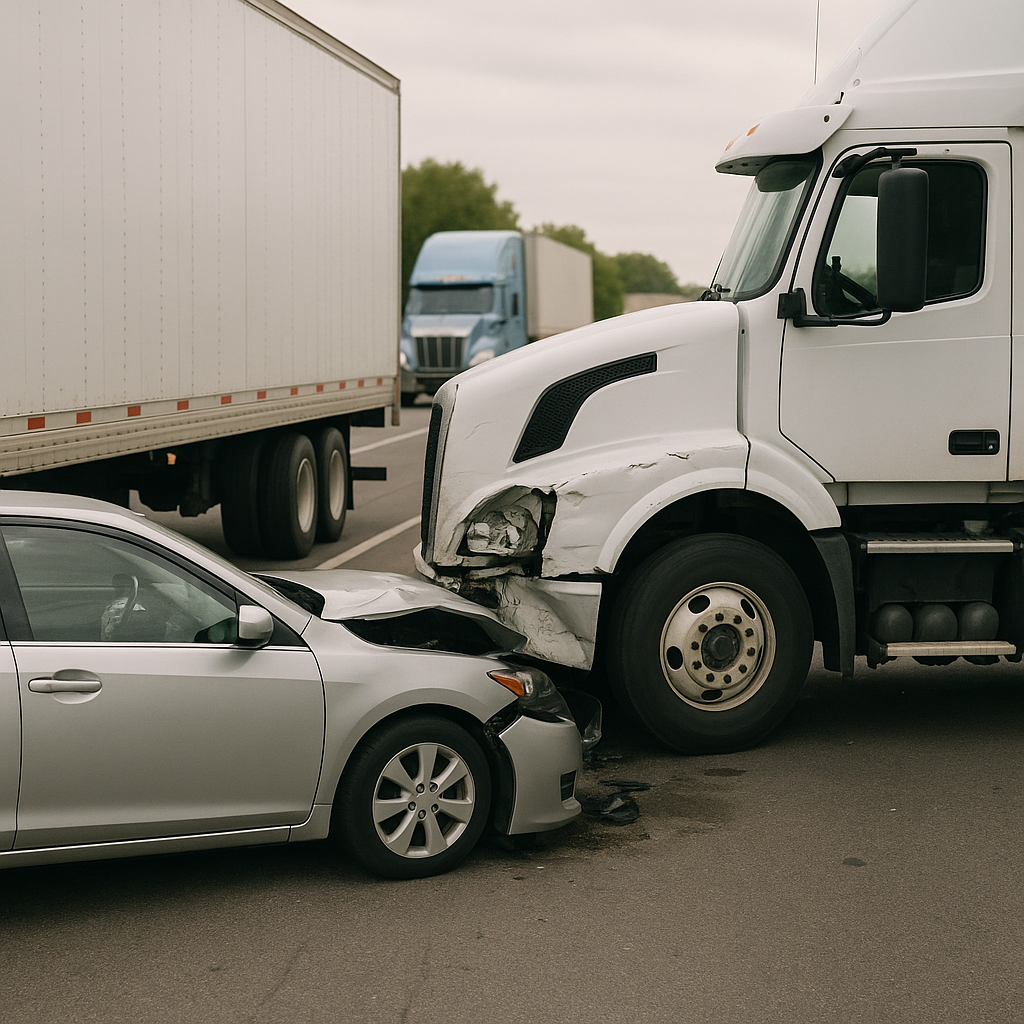
What happens if a truck accident involves multiple companies
Introduction to fault and responsibility in truck accidents
When a crash involves a commercial truck, responsibility often doesn’t stop with the driver. A truck’s operation can involve several businesses—sometimes across ownership, maintenance, loading, and oversight. That can turn the situation into a multiple company liability truck accident, where fault and financial responsibility may be evaluated across more than one organization.
How fault is typically evaluated in this type of situation
Fault is generally assessed by identifying which duties existed (such as safe driving, proper maintenance, compliant scheduling, or safe loading) and whether any party failed to meet them in a way that contributed to the crash. Investigators and insurers often compare what should have happened under safety standards and contracts with what actually occurred.
Key factors that influence who may be responsible
Common areas reviewed in a multiple company liability truck accident include:
– Driver conduct (speeding, distraction, impairment, fatigue)
– Hours-of-service compliance and the accuracy of logbooks or ELD data
– Hiring, training, supervision, and safety policies
– Inspection, maintenance, and repair history for the tractor and trailer
– Load securement, cargo weight, and distribution practices
– Equipment condition (tires, brakes, coupling devices, lighting)
How different parties can share or shift liability
A single truck can be connected to a carrier, an equipment owner, a leasing company, a shipper or loader, a freight broker, or a parts manufacturer. Contracts may attempt to assign responsibilities (for example, who controls dispatch, routes, deadlines, or maintenance). However, contractual language does not automatically resolve fault; investigators still examine real-world control and conduct.
How evidence is used to determine fault
Evidence is central to sorting out who did what and when. This may include police reports, witness statements, dashcam footage, ECM/“black box” data, ELD logs, inspection reports, work orders, bills of lading, load diagrams, and internal communications. Timelines can be important, especially when evaluating fatigue, maintenance intervals, or pre-trip inspections.
Common complications in determining liability
Multi-party cases can involve conflicting accounts, shifting blame among insurers, and key records held by companies. Additional complexity may come from varying state rules and federal trucking regulations, plus technical questions about equipment failure or cargo securement standards.
General awareness of how fault can impact outcomes and next steps
When multiple parties may share fault, claims often involve multiple insurance policies, which can increase available coverage but also add coordination challenges. Outcomes typically depend on how clearly evidence links each party’s actions—or omissions—to the crash.
Closing informational summary (neutral and balanced)
In a multiple company liability truck accident, liability is usually determined by examining control, safety duties, compliance, and causation across everyone involved in the truck’s operation and support. Because responsibility can be shared, these matters often require careful evidence review to understand how each contributing factor fits into the overall event.