
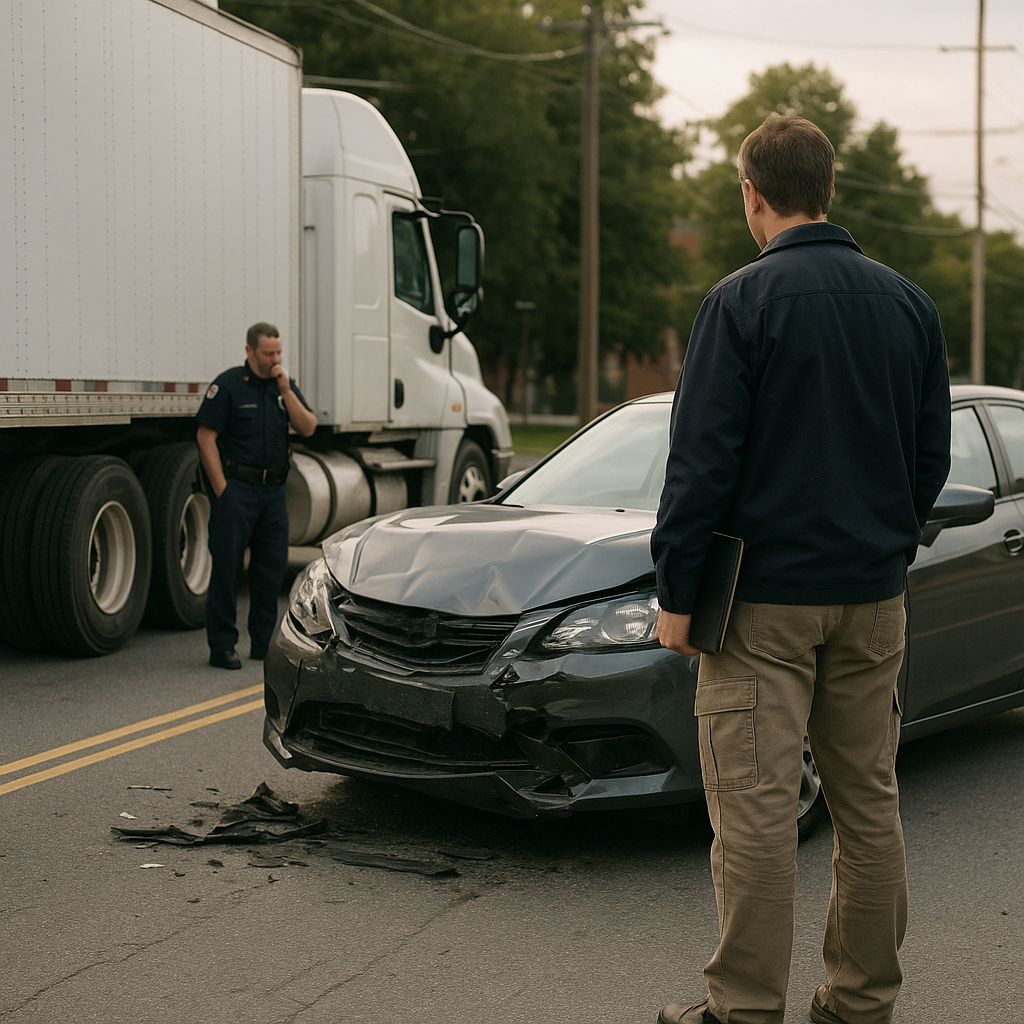
What happens if liability cannot be clearly determined
Introduction to fault and responsibility in truck accidents
In a truck crash, “liability” refers to legal responsibility for causing the collision and resulting losses. An unclear liability truck accident happens when the available information does not clearly point to one at-fault party. This is common in trucking because a crash may involve more than just two drivers—it can also involve a motor carrier, a shipper, a maintenance vendor, or roadway factors. When responsibility is uncertain, the process often becomes more investigative and slower-moving.
How fault is typically evaluated in this type of situation
Fault is generally evaluated by comparing what happened against traffic laws, safety regulations, and reasonable driving standards. Investigators and insurers look at the sequence of events, whether any party violated a rule or policy, and whether that violation contributed to the crash.
Key factors that influence who may be responsible
Several overlapping issues can make a case unclear, including:
– Driver behavior (speed, following distance, distraction, fatigue)
– Company practices (scheduling pressures, training, supervision)
– Vehicle condition (brakes, tires, lighting, load securement)
– Road and weather conditions (construction zones, signage, visibility)
– Third-party actions (another motorist cutting in, faulty parts, improper loading)
How different parties can share or shift liability
In an unclear liability truck accident, responsibility may be divided among multiple parties. For example, a driver may be blamed for a maneuver while a company may be questioned for maintenance gaps or logbook compliance. In some areas, comparative fault rules can reduce compensation based on each party’s percentage of responsibility rather than treating fault as all-or-nothing.
How evidence is used to determine fault
When liability is disputed, evidence becomes central. This can include police reports, dash camera footage, electronic control module (ECM) data, driver logs, GPS records, inspection and maintenance history, and witness statements. Experts such as accident reconstruction specialists may analyze vehicle dynamics, timing, and roadway measurements to clarify what likely occurred.
Common complications in determining liability
Disputes often arise because evidence is incomplete, conflicting, or technically complex. Commercial vehicles generate large volumes of data, and interpreting it can be contested. Insurance carriers may disagree on causation, which can slow negotiations. Multiple policies, multiple defendants, and differing accounts of the same event can add further delay.
General awareness of how fault can impact outcomes and next steps
Unclear fault can influence timelines, settlement discussions, and the size of offers while evidence is still being developed. If informal negotiations stall, the parties may use formal legal procedures to request documents, preserve records, and obtain testimony—without guaranteeing any particular outcome.
Closing informational summary (neutral and balanced)
When liability cannot be clearly determined, a truck accident claim typically becomes more evidence-driven and may involve shared responsibility across several parties. The final allocation of fault usually depends on the quality of documentation, technical analysis, and how applicable rules are interpreted in the specific jurisdiction.