
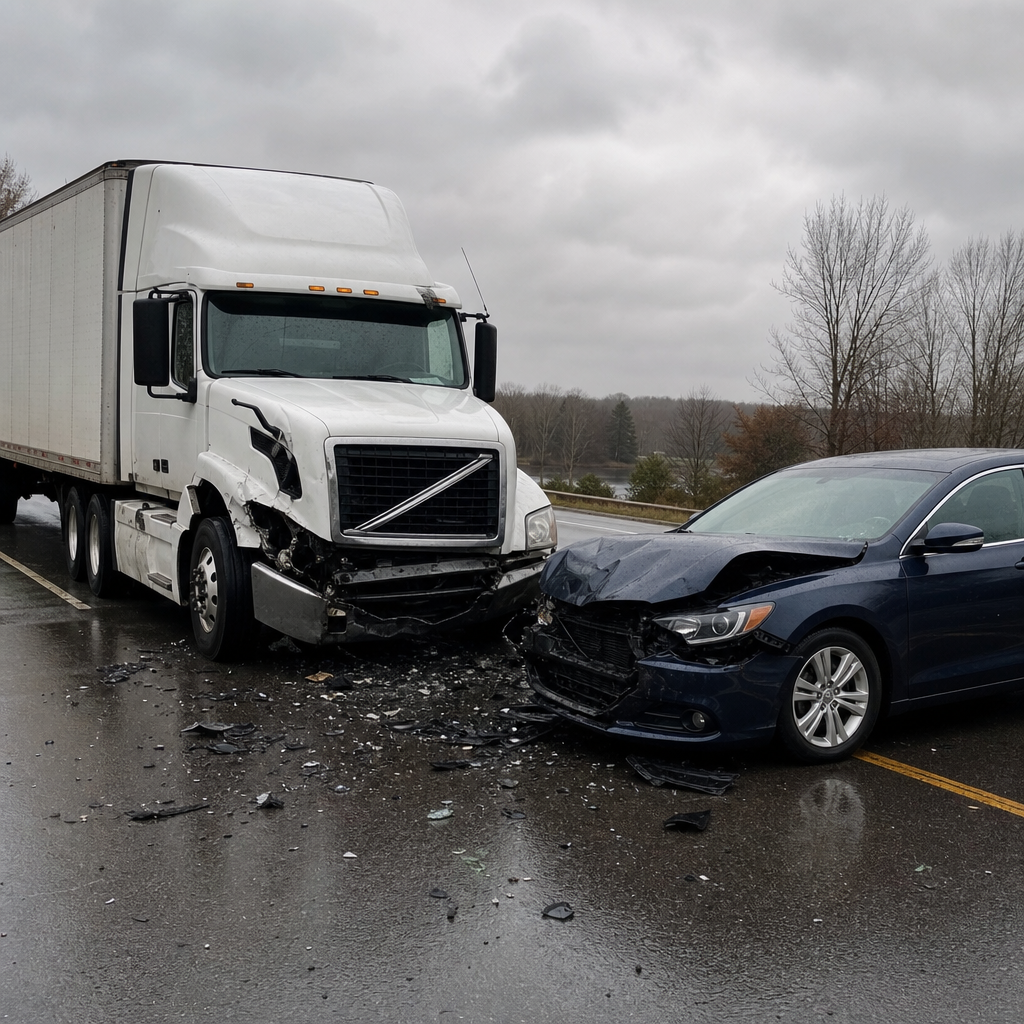
In the aftermath of a semi truck accident, everyday routines often unravel in unexpected ways. People find themselves coping with an array of experiences, each colored by the force of the impact and the swirl of confusion that follows.
Scenes Following Minor Impact
Minor collisions can leave scattered reminders long after the dust settles. Sometimes, drivers sit motionless gripping the wheel, heart skipping and mind racing, unsure whether they’re shaken up or truly hurt. Bent fenders and crumpled bumpers spark quick glances between parties, uncertainty hanging in the air while traffic crawls around them.
Some individuals walk away thinking it was “just a bump,” only to feel aches emerge hours later. It’s not uncommon to spot people on the roadside rubbing their neck or back, faces knit in concentration, trying to recall every detail of the moments before and after the truck loomed in the mirror.
The Chaotic Aftermath of Severe Collisions
Major impacts unleash chaos, often bringing emergency lights and a flurry of first responders. Vehicles may end up mangled together, debris scattered far beyond the original point of contact. Sirens can echo for blocks. Individuals sometimes sit nearby on curb, blanket draped around their shoulders, staring out at the tangle of metal. A surreal silence might settle in once the initial commotion subsides.
Inside the cab or car, people frequently struggle with disorientation. Some find themselves unable to move, pinned by twisted frames or incapacitated by injuries. Bystanders gather, exchanging worried glances, murmuring quietly as responders work to extract those trapped. Sometimes, only silence fills the space where a voice once answered.
Emotional Reactions and Lingering Stress
No matter the severity, emotions rise and fall in unpredictable ways. Tears, anger, or numbness can make appearances in quick succession. Friends and families, when they arrive, often wade through confusion and frustration, weaving support into the fabric of the moment. The hum of questions grows, yet many find themselves unable to process what’s just occurred.
Returning to the scene mentally happens often. The sight of large trucks or the sound of an engine brake can trigger a rush of memory. Some recount feeling uneasy driving again, or startle more easily when traffic suddenly shifts, confidence shaken by a single event.
Everyday Lives Interrupted
Work schedules, family routines, even grocery trips no longer flow as expected. Car repairs mean conversations with shops and time spent waiting for updates. Appointments become a new part of daily life, filling calendars with checkups or assessments. The interruption itself becomes a lasting theme, seeping into ordinary days.
People often talk about small details sticking in their minds—the look of the sky, the sound of passing cars, fragments of conversation and the jarring sight of headlights creeping up too fast. These moments leave imprints, reminders that regular routines can shift in the blink of an eye.
This page is for general informational purposes only. It does not provide legal advice or direction of any kind.