
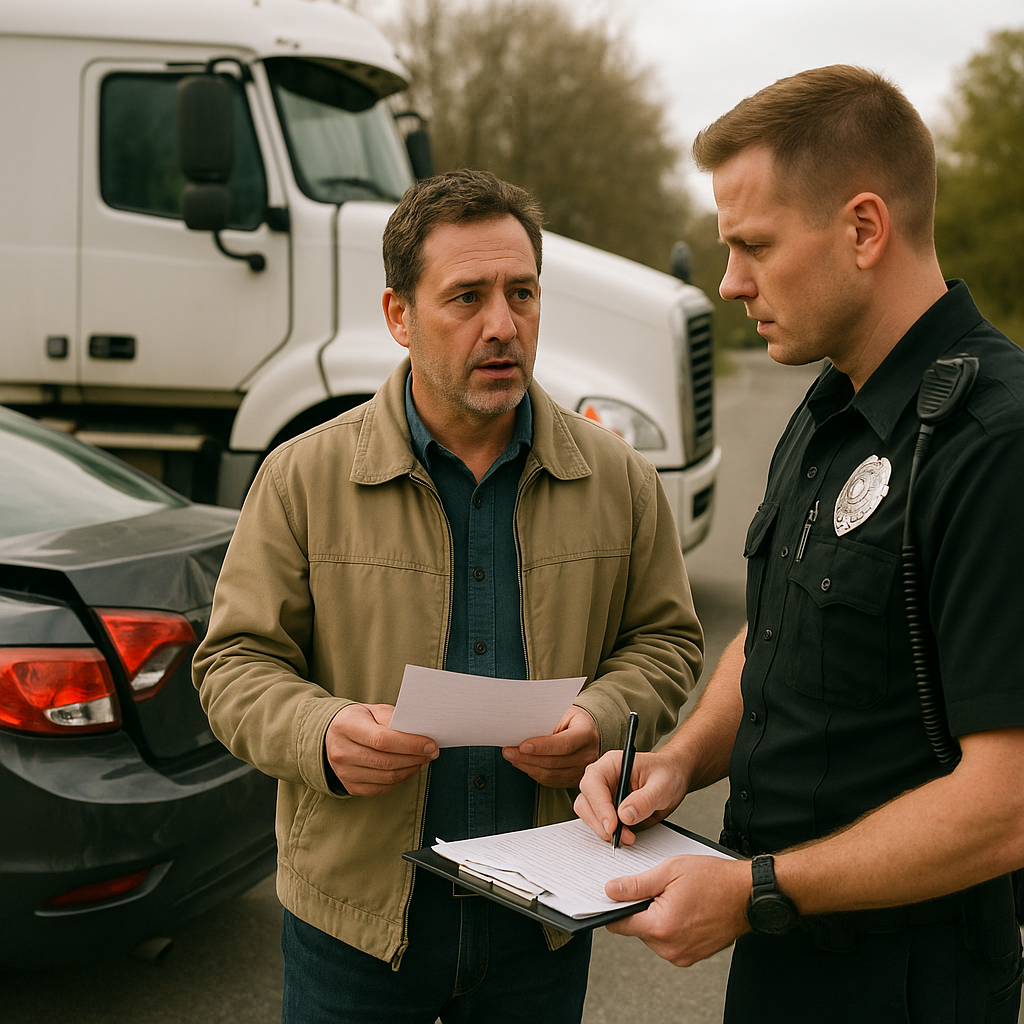
What role witness statements play in liability
Introduction to fault and responsibility in truck accidents
Determining fault after a truck crash often involves more than identifying which vehicle made contact. Investigators, insurers, and courts generally look for evidence of negligence and how that negligence contributed to the collision. In a witness liability truck accident context, witness statements can be especially important because they may clarify what happened in the moments leading up to impact and help connect conduct to financial responsibility.
How fault is typically evaluated in this type of situation
Fault is commonly assessed by comparing each party’s actions against traffic laws, safety regulations, and reasonable driving standards. Because trucks operate under additional commercial rules (such as hours-of-service limits and maintenance requirements), evaluations may also consider whether regulatory violations played a role.
Key factors that influence who may be responsible
Key considerations often include speed, following distance, lane position, signaling, right-of-way, braking behavior, and signs of distraction or impairment. When physical evidence is limited—no clear skid marks, poor camera coverage, or unclear vehicle damage patterns—witnesses can fill gaps by describing visible behaviors like drifting, late braking, or an unsafe lane change.
How different parties can share or shift liability
Truck crashes may involve multiple potentially responsible parties. Beyond drivers, liability can sometimes extend to a motor carrier (policies, training, supervision), a maintenance provider (repairs and inspections), a shipper/loader (cargo securement), or even a public entity (road design, signage, debris). Witness observations—such as a swaying trailer, smoking brakes, or hazardous roadway conditions—can affect whether responsibility is viewed as shared or redirected.
How evidence is used to determine fault
Fault decisions typically rely on a combination of police reports, vehicle damage analysis, electronic data (if available), and scene evidence. Witness statements often function as corroboration: they may support or challenge what drivers, passengers, or companies report. They can also help accident reconstruction by providing sequence-of-events detail—who moved first, when braking began, and whether hazards were visible.
Common complications in determining liability
Witness accounts are not automatically decisive. Their reliability may be evaluated based on vantage point, lighting, distance, distractions, and whether the story stays consistent over time. Delayed statements, bias, or overly broad conclusions (e.g., “the truck was reckless” without specifics) may reduce usefulness, while prompt, detailed observations tend to carry more weight in a witness liability truck accident review.
General awareness of how fault can impact outcomes and next steps
How fault is allocated can influence insurance decisions, settlement discussions, and whether litigation continues. Strong, consistent testimony that aligns with other evidence may increase pressure to resolve a claim, while conflicting accounts can slow negotiations and increase uncertainty.
Closing informational summary (neutral and balanced)
Witness statements often play a practical role in clarifying events, testing competing narratives, and identifying contributing factors in truck crashes. In a witness liability truck accident, testimony is typically weighed alongside physical and digital evidence, with decision-makers focusing on specificity, credibility, and consistency rather than assumptions or general impressions.